
Loading cart contents...
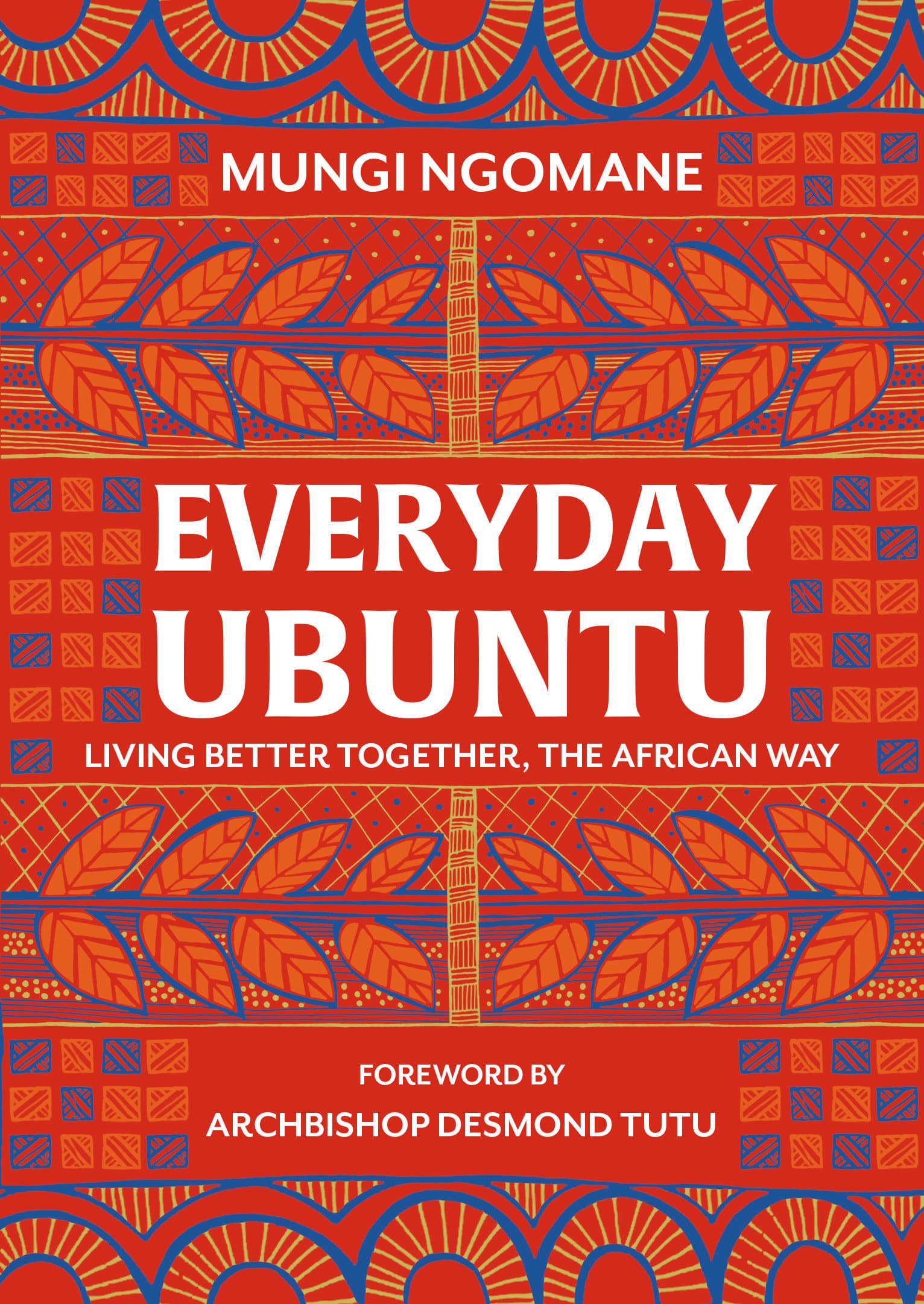
Everyday Ubuntu: Living Better Together, the African Way
25.00 JOD
Please allow 2 – 5 weeks for delivery of this item
Description
The essential guide to Ubuntu, the South African philosophy which teaches that our common humanity and interconnectedness is key to living a better life.”This book will open your eyes, mind and heart to a way of being in the world that will make our world a better and more caring one.”–Archbishop Desmond TutuUbuntu is a Xhosa word originating from a South African philosophy that encapsulates all our aspirations about how to live life well, together. It is the belief in a universal human bond: I am only because you are. And it means that if you are able to see everyone as fully human, connected to you by their humanity, you will never be able to treat others as disposable or without worth. By embracing the philosophy of Ubuntu and living it out in daily life it’s possible to overcome division and be stronger together in a world where the wise build bridges, not walls.These 14 lessons from the Rainbow Nation are an essential toolkit to helping us all to live better, together. In stories that recognise our common humanity, our connectedness and interdependence, Everyday Ubuntu helps to make sense of the world and our place in it. Exploring ideas of kindness and forgiveness, tolerance and the power of listening, it shows how we can all benefit from embracing others. Including practical applications and mindful exercises, it is an inspirational guide to a more fulfilling life as part of the large family to which we all belong.
Additional information
| Weight | 0.46 kg |
|---|---|
| Dimensions | 2.08 × 13.44 × 3.29 cm |
| Language | |
| Format Old` | |
| Pages | 240 |
| Imprint | |
| Publisher | |
| Year Published | 2020-1-7 |
| by | |
| Publication City/Country | Canada |
| ISBN 10 | 0525610995 |
| About The Author | NOMPUMELELO (MUNGI) NGOMANE is the granddaughter of Archbishop Desmond Tutu and patron of the Tutu Foundation UK. Mungi has never felt that her family forced her to follow in their footsteps but that their hope for justice and human dignity for all was passed down through her genes. She has worked in Middle East conflict resolution and for the advancement of women and girls for some of the world's foremost advocacy organizations and initiatives. She was recently campaign coordinator for a new national and bipartisan campaign, Millions of Conversations, aimed at tackling Islamophobia and discrimination in the US. After she has brought Everyday Ubuntu into the world, she plans to return to NGO advocacy and programme management. She is passionate about human rights, specifically the advancement of women and girls, the protection of refugees and the liberation of the Palestinian people. She hopes one day all girls will have FUNdamental human rights. She has a Master's in International Studies and Diplomacy from the School of Oriental and African Studies (SOAS) at the University of London. |
"This book will open your eyes, mind and heart to a way of being in the world that will make our world a better and more caring one." Archbishop Desmond Tutu | |
| Excerpt From Book | Introduction‘When we want to give high praise to someone we say, “Yhu, u nobuntu”: "Hey, so-and-so has ubuntu.” Then you are generous, you are hospitable, you are friendly and caring and compassionate.’Archbishop Desmond Tutu, No Future Without ForgivenessUbuntu is a way of life from which we can all learn. And it’s one of my favourite words. In fact, my feelings about ubuntu run so deeply that I’ve had it tattooed on the inside of my right wrist. For me, it’s a small word but it encapsulates a huge idea. Originating from a Southern African philosophy, it encompasses all our aspirations about how to live life well, together. We feel it when we connect with other people and share a sense of humanity; when we listen deeply and experience an emotional bond; when we treat ourselves and other people with the dignity they deserve. It exists when people unite for a common good, and in today’s chaotic and often confusing world, its values are more important than ever because it says that if we join together we can overcome our differences and our problems. Whoever we are, wherever we live, whatever our culture, ubuntu can help us co-exist in harmony and peace. I was raised in a community that taught me ubuntu as one of my earliest lessons. My grandfather, Archbishop Desmond Tutu, explained the essence of ubuntu as, ‘My humanity is caught up, is inextricably bound up, in yours.’ In my family, we were brought up to understand that a person who has ubuntu is one whose life is worth emulating. The bedrock of the philosophy is respect, for yourself and for others. So if you’re able to see other people, even strangers, as fully human you will never be able to treat them as disposable or without worth. Life in today’s complex societies is full of trials and tribulations, and there are self-help books aplenty attempting to guide us through it. We are told to meditate and reflect; to look inside ourselves for answers, as that is the only place we will find them. The notion of ‘self-care’ is a whole movement in itself. There is certainly a time and place for self-examination. However, ubuntu teaches us to also look outside ourselves to find answers. It’s about seeing the bigger picture; the other side of the story. Ubuntu is about reaching out to our fellow men and women, through whom we might just find the comfort, contentment and sense of belonging we crave. Ubuntu tells us that individuals are nothing without other human beings. It encompasses everyone, regardless of race, creed or colour. It embraces our differences and celebrates them. The concept of ubuntu is found in almost all African Bantu languages. It shares its roots with the word ‘bantu’– meaning ‘people’ – and almost always denotes the importance of community and connection. The idea of ubuntu is best represented in both Xhosa and Zulu by the proverb ‘umuntu, ngumuntu, ngabantu’, meaning ‘a person is a person through other persons’. It is a proverb which exists in all the African languages of South Africa. The word ‘ubuntu’, or closely related words, are found in many other African countries and cultures. In Rwanda and Burundi it means ‘human generosity’. In parts of Kenya ‘utu’ is a concept, which means that every action should be for the benefit of the community. In Malawi it’s ‘uMunthu’, an idea that on your own you are no better than a wild animal, but two or more people make a community. The sense that ‘I am only because you are’ runs throughout. My grandfather coined the term ‘Rainbow Nation’ for South Africa after the country’s first democratic elections in 1994, to symbolize the unity of its cultures after the collapse of apartheid. In this book you will find fourteen lessons built on ubuntu, which is the same number of chapters as there are in the Rainbow Nation’s constitution. Ubuntu is the founding principle of my grandfather’s life work and, as a patron of the Tutu Foundation UK myself, I too aspire to live by its teachings in my everyday life. By introducing this philosophy to you, I hope it enhances your life experience as much as it has enhanced mine. I hope it encourages you to reach out to the people around you – both friends and strangers – who make you who you are. |
Only logged in customers who have purchased this product may leave a review.
Related products
![Competing Against Time How Time-Based Competition is Reshaping Global Markets]()
On backorder 2-5 Weeks to Arrive
![Calculated Risks How to Know When Numbers Deceive You]()
On backorder 2-5 Weeks to Arrive
![]()
On backorder 2-5 Weeks to Arrive
![]()
On backorder 2-5 Weeks to Arrive



Reviews
There are no reviews yet.