
Loading cart contents...
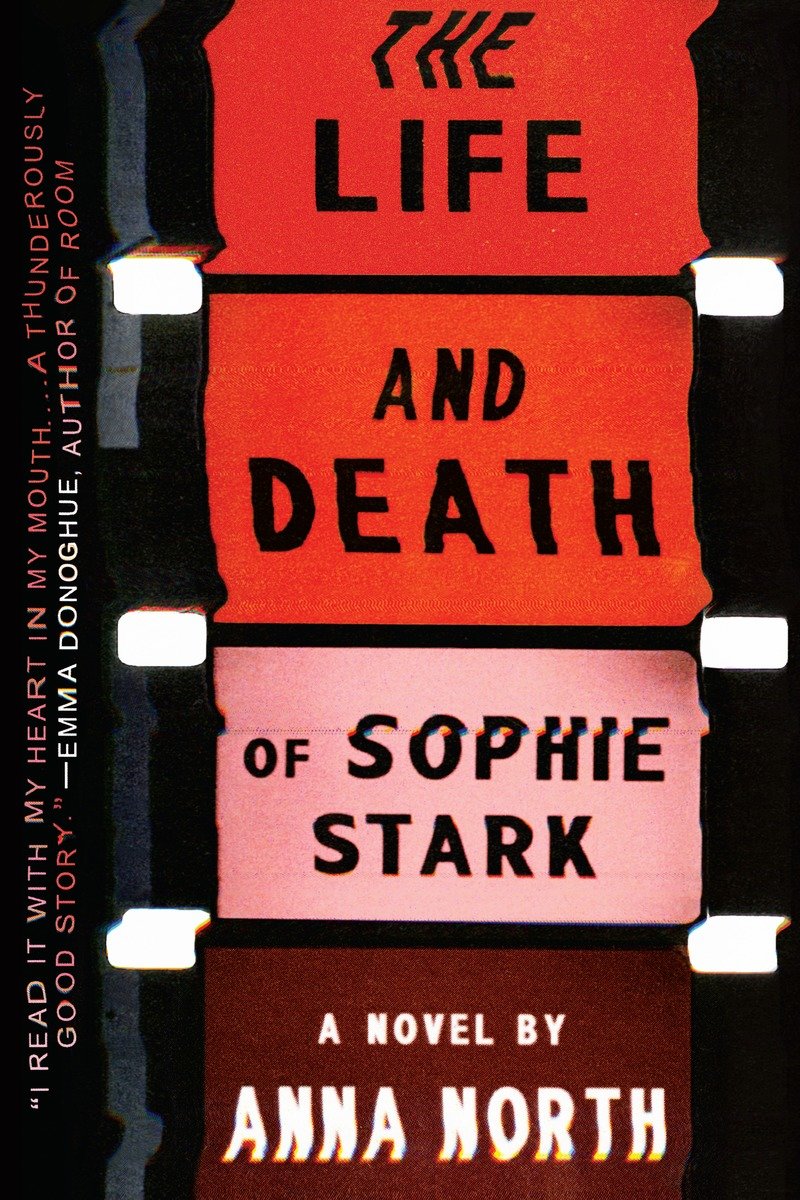
The Life and Death of Sophie Stark
22.00 JOD
Please allow 2 – 5 weeks for delivery of this item
Description
Winner of the 2016 Lambda Literary Award for Bisexual Fiction“I read The Life and Death of Sophie Stark with my heart in my mouth. Not only a dissection of genius and the havoc it can wreak, but also a thunderously good story.”—Emma Donoghue, New York Times bestselling author of Room“This novel is perceptive, subtle, funny and lingers in unexpected ways. The analysis of a woman who puts her art above all else is equal parts inspiration and warning story. Anna North makes prose look easy.”—Lena DunhamWho is Sophie Stark? A brilliant filmmaker, a lover, a wife, a friend, a traitor. A troubled misfit who becomes a star, at great cost to the people who love her and, ultimately, to herself. Gripping and provocative, The Life and Death of Sophie Stark is a story of the power of art to transform lives and to destroy them, and of an artist’s drive to create something greater than herself, even if it means sacrificing everything—and everyone—she loves.
Additional information
| Weight | 0.22246 kg |
|---|---|
| Dimensions | 1.524 × 13.716 × 20.828 cm |
| Language | |
| Format Old` | |
| Publisher | |
| Imprint | |
| Year Published | 2016-6-14 |
| by | |
| Publication City/Country | USA |
| ISBN 10 | 0399184473 |
| About The Author | Anna North is a graduate of the Iowa Writers’ Workshop, and her writing has appeared in the San Francisco Chronicle, The Atlantic, Glimmer Train, Nautilus, and Salon; on Jezebel and BuzzFeed; and in the New York Times, where she is a staff editor. The author of America Pacifica, she lives in Brooklyn, New York. |
"Last month I bragged about having purchased The Life and Death of Sophie Stark and now I can brag about having finished it. This book is deceptively simple–what seems like a collection of loose and easy interwoven recollections is actually thriller-paced, with mysteries revealed at every turn. The great mystery at the center is Sophie Stark, a totally unforgettable female antihero who conforms to absolutely none of our expectations and suffers deeply for it."—Lena Dunham“I read The Life and Death of Sophie Stark with my heart in my mouth. Not only a dissection of genius and the havoc it can wreak, but also a thunderously good story.” —Emma Donoghue, New York Times bestselling author of Room“Powerful…This provocative book by North, a staff editor at The New York Times, illustrates just how far an artist will go in pursuit of authentic expression…North’s prose is as skillful as her protagonist’s shot list. Filled with ‘the sad fumbling of human love,’ Sophie’s story examines the relationship between art and suffering.”—Sarah Ferguson, The New York Times Book Review“As with every experimental approach to art, this subsection of fiction has yielded plenty of successes and failures over the years. Fortunately, though, The Life and Death of Sophie Stark by Anna North definitely belongs in the former category. ‘Told from the perspectives of those who knew Sophie best—her brother, her girlfriend, [and] her husband [among others],’ the book offers one riveting, comprehensive, and ultimately moving account after another. Through these reflections, readers become enveloped not only in the essence and circumstances of Stark herself, but also in the histories, feelings, and traits of those who remember her. North creates vivid and relatable characters whose reactions, exchanges, and decisions are intriguing yet wholly realistic and unspectacular, allowing each moment to radiate subtle beauty and sincerity. By the end of it, Stark has affected the reader’s life as much as she has any around her…. Not only is The Life and Death of Sophie Stark a brilliant character study, but it also serves as an fascinating commentary on the balance between morality, artistry, genius, and integrity…. Suffice it to say that North crafted a gem full of complex personalities, tragic yet redeeming circumstances, and striking conversations and judgments. Her language strikes a lovely balance between poeticism and practicality too, making each sentence graceful and luminous without prioritizing stylishness over substance. In the end, The Life and Death of Sophie Stark is utterly captivating, surprising, and rewarding. You won’t forget about it (or her) for a long time.” —PopMatters.com“[By] turns disturbing, enchanting and enthralling….North’s writing is lovely and lithe, a supple conversational style that draws you in with each fresh perspective on the enigmatic Sophie….a completely compelling read that asks whether broken hearts and ruined relationships are prices worth paying in the name of creativity.” —Daily Express (UK)"Anna North is a natural, butter-smooth storyteller, and The Life and Death of Sophie Stark is an elegant, kaleidoscopic look at a challenging artist and at the way our lives are, in some respects, only silhouettes made from the perceptions of those who know us." —Maggie Shipstead, author of Seating Arrangements"Anna North has woven a circle of longing and frustration around her commanding central character, the enigmatic Sophie Stark. This novel isn’t just a character study, though—it’s a story of art, manipulation, and dependence. And, in its unique and satisfying structure, it’s a narrative high wire act, deftly executed." —Rebecca Makkai, author of The Hundred-Year House and Music for Wartime “If it were possible for a book to read like butter, even though it’s a heavy subject, [The Life and Death of Sophie Stark] would be it. Sophie’s life is told with perfect flow changing from point-of-view between the various people she affected. From broken childhoods to broken adulthoods Sophie carries the burden of being misunderstood and unconnected, while somehow being gifted with the ability to create movies and see people’s vulnerable core. Quietly powerful, beautifully written, with characters you can see and feel.” —BookRiot“A fierce, page-turning, exposé of a would-be/could-be bright star. ‘Friends,’ former flames, and critics paint a portrait of an elusive cult filmmaker and the bridges she burned along the way.”—Marie Claire“An elegant, intimate portrait of an exceptionally talented woman and her rise to fame….Bold and enthralling, The Life and Death of Sophie Stark speaks to the costs of creating art and the sacrifices we must make in pursuit of artistic integrity.” —BuzzFeed“Sophie is difficult to understand, and that's exactly what makes her such an original, beautifully drawn character…. The same goes for the other characters, each of whom is incredibly detailed and realistic, sometimes heartbreakingly so. North inhabits each of their voices beautifully, with no condescension or moralizing; she challenges the reader to see these people as real human beings, without judgment or condemnation…. North is a smart writer as well as a deeply humane one, and The Life and Death of Sophie Stark is a bold and graceful novel, executed with incredible artistry. The excellent writing aside, it's worth a read just to meet Sophie, an unforgettable character who can't quite manage to run away from herself.” —Michael Schaub, NPR.org“The Life and Death of Sophie Stark is your summer must-read… From start to finish, it spun like a top, leaving me dizzy in the best possible way. The story itself is a riveting and often haunting exploration of our title character, a tortured and enigmatic filmmaker… It’s a compelling narrative structure that will engross you and leave you wanting more, all while being a completely satisfying and delicious to read.” —Hello Giggles“North’s engrossing second novel portrays with painful clarity the life of a flawed but highly talented artist. An essential choice for literary fiction readers.” —Library Journal (starred review)“In this boldly conceived, superbly executed novel, Anna North explores the life of the brilliant, relentless Sophie Stark and the lives of those closest to her. The result is a portrait of a woman and her films so vivid and so painful that she leaps out of these pages into the reader's imagination. A wonderful novel about art and passion and how we accommodate the other.” —Margot Livesey, author of The Flight of Gemma Hardy “Anna North's first novel, America Pacifica, was superb, and The Life and Death of Sophie Stark, her second, is even better: skillfully designed and deeply felt, of course, but also wholly and mysteriously alive, in a way that many books simply aren't. It explores the way people can be startled and changed—and frequently damaged and betrayed—by a confrontation with art, and proceeds in a round-robin of voices, each entirely natural, entirely human, yet filled with vibrancy and intimacy.” —Kevin Brockmeier, author of The Brief History of the Dead and The Illumination "Provocative and deeply compelling, The Life and Death of Sophie Stark is an incisive exploration of artistic integrity and ambition—and a haunting meditation on what it means to truly know another person." —Jennifer Dubois, author of Cartwheel and A Partial History of Lost Causes“The Life and Death of Sophie Stark succeeds wildly at the almost impossible task of making an artist and her art come alive on the page. Anna North captures with fierce clarity the compulsions and ecstasies of creation, the spooky force it exerts on those drawn into a maker's vision. Whether art is a gift or a curse is unflinchingly explored in this tight, suspenseful, and deeply empathic novel.” —Pamela Erens, author of The Understory and The Virgins “The novel builds slowly, and, though its denouement is promised by the book's title, it unfolds with a surprising depth of feeling… An engaging exploration of what it takes to make art and, more importantly, what it takes to love those who make it.” —Kirkus"The pinwheel structure of Anna North's The Life and Death of Sophie Stark is a narrative triumph—destabilizing and enthralling—and its titular character is a beautiful, peculiar mystery. This novel should have special appeal to readers with an interest in film and filmmaking, but I'd expect anyone who enjoys a good story to like it." —Owen King, author of Double Feature“As taut and artistically ambitious as its title character, North’s novel upends the trope of the lone, tortured genius, considering instead the deeply human consequences of one person’s uncompromising vision.” —Booklist “North’s nuanced prose and emphasis on characterization result in a thoughtful, moving read that explores the creative process and its effects on relationships.” —Publishers WeeklyPraise for AMERICA PACIFICA “A dark, gripping, and wildly creative debut with a futuristic end-of-days setting.” —BookPage "Anna North's fluid prose moves this story along with considerable force and velocity. The language in America Pacifica seeps into you, word by word, drop by drop, until you are saturated in the details of this vivid and frightening world." —Charles Yu, author of How to Live Safely in a Science Fictional Universe "Anna North has crafted a dangerous, wise, and deeply affecting vision of the future that is also a dark mirror held to our present. At once thrilling and heartbreaking, America Pacifica suggests how we shape ourselves by shaping the world." —Jedediah Berry, author of The Manual of Detection “Richly imagined… North, a recent graduate of the Iowa Writers' Workshop, is a stylish writer and a good storyteller who keeps the pages turning…. An entertaining, stylishly written doomsday novel.” —Kirkus “A dark, page-turning debut… North cleverly combines elements from other popular modern stories—a brave young heroine on an against-all-the-odds quest on a strange island with shocking secrets…The story—and the wealth of detail in a vividly imagined world—is memorable.” —Publishers Weekly “A thrilling and often very gripping read, expanding beyond its basic quest narrative to comment on society and the politics of control….North weaves in black humor, frank sex scenes, and bittersweet memories…. An enjoyable and intriguing read.” —Time Out London “A richly rendered post-apocalyptic novel set on a Pacific island…. In her debut novel, Anna North shows us a disturbing vision of the future that is disturbingly similar to our present.” —Daily Beast “One of North’s greatest skills is her ability to tell a story within a story. From the first chapter — where Sophie’s girlfriend Allison is telling a traumatic story about her childhood at a bar that Sophie hears and adapts into a film — readers encounter a multi-faceted work…. North’s novel is an intricate, abstract portrait of an artist as a young woman.” —New York Daily NewsRebecca Makkai, author of The Hundred-Year House and the forthcoming Music for Wartime, interviews Anna North about writing The Life and Death of Sophie Stark. Rebecca Makkai: There’s something almost vampiric about Sophie Stark, the artist at the center of your novel—the way she uses people for her art. Do you think all artists do this to a certain extent? Is something lost when we see others not just as humans but also as potential material? Anna North: I do think a lot of creative people have a tendency to use and reuse bits of real life in their work, and that can include the characteristics and life stories of people close to us. I think Sophie takes this to a bit of an extreme—it’s hard for her to imagine other people’s points of view, and even when she can, she doesn’t always care. So she uses people’s stories without regard for how it will make them feel. I—and I think most writers I know—try to be a little more careful, and avoid using the stories of our loved ones in ways that might hurt them. That’s easier in fiction, where you can always make changes, than in memoir, where the story of your life necessarily intersects with those of other people. And I know a lot of memoir writers have struggled with how much of other people’s stories they should tell. I think there can also be a larger tension between being an artist and just being a person with relationships and obligations. (I think Jenny Offill gets at this in Dept. of Speculation with her idea of the “art monster,” someone who essentially eschews obligations.) Most artists figure out a balance between the two, but Sophie doesn’t, really. She almost always chooses being a great artist over being a good person, and that’s often good for her art—although, crucially, not always. Rebecca Makkai: Sophie is a magnetic character, in more than one sense; not only are others drawn to her, but she’s the orienting factor in all their narrations. And we never get her point of view, which only adds to her allure. Did you ever consider using Sophie’s voice? Did you ever experiment with it outside of the draft? Anna North: I never wrote anything from Sophie’s point of view. The other points of view came to me really naturally—some of them all at once, in a way that was hard to sort out at first. But Sophie’s never did, at all—I never felt compelled to write in her voice. Sometimes I think that’s because she doesn’t understand herself very well and would be bad at telling her own story. But that’s letting her off the hook a little bit—as the novel goes on, I think you realize she knows herself, and her shortcomings, better than she pretends she does. Still, I think there’s something mysterious at the core of Sophie—part of that mystery is self-created, but it’s still there. And I think that mystery took on a life of its own pretty early and prevented me from trying to write from Sophie’s perspective. It’s like she wouldn’t let me inside her head. Rebecca Makkai: How do you compensate for the absence in the middle of the narrative? That absence—Sophie’s enigma—is the point, of course, and I think the story has to be told this way. But what were your considerations in writing, basically, a circle around her? You’ve made us feel we know her intimately, even while we’ve never gotten access to her thoughts. How did you do that? Anna North: Part of it was just trying to write each narrator’s point of view as fully as I could, so that by telling their stories I would end up telling Sophie’s too. And part of it was that even though I never wrote from Sophie’s point of view, I did have a certain core idea of her. Maybe it wasn’t even an idea of what she’s really like—as I mentioned above, what she’s really like is a bit of a mystery, and maybe that’s true to some extent of anyone. But I did have a sense early on of the identity or identities she projects, the way she appears to other people, and I hope in getting that across I’ve helped readers know her, at least as much as anyone can. Rebecca Makkai: Months after I read the book for the first time, Sophie’s physicality has stayed with me—specifically her hands, and the way she seems to emanate heat. Does a character’s physical presence come to you from the beginning, or later in the process? Anna North: With Sophie it came to me very early—her androgyny, her sort of hawkish face, her big eyes. I had a few models, but I also had a really clear sense of her unique appearance almost before I wrote anything. I think that’s pretty unusual for me, though, and maybe an indication of how strong the myth of Sophie already was in my head before I started writing. With many of the other characters—as is often the case in my writing—I first had an idea of how I wanted them to behave, or of their back story, or of something they wanted, and at a certain point I had to go back and spend some time imagining what I wanted them to look like. Sometimes not very many of those physical details even ended up in the book, but I needed them in my head to visualize the characters in the physical world. Rebecca Makkai: Interpolated between the other sections are reviews of Sophie’s work by a Benjamin Martin, who evolves from a pompous college student to a celebrated critic—one who has unwittingly affected Sophie’s life. He remarks that “it pained Sophie how poorly other people understood her.” If I were reviewing your book, rather than asking you questions about it, I think I’d feel the specter of Benjamin Martin hanging over me. Do you have certain fears about the way your work might be misread? Anna North: It’s funny, I didn’t really think about how Ben’s reviews might correspond to reviews of the book until I wrote his final section, which isn’t quite a review but which does kind of respond to the action of the entire book. And I thought of him throughout not just as a critic of Sophie’s work but as a character whose life story is intertwined with hers; she influences him so deeply, and his reactions to her films are also influenced so much by what’s going on in his life at the time. Where my own work is concerned, I think I have all the usual fears about people hating it or thinking I’m terrible. But I don’t worry as much about it being misread because I’m not sure that’s possible. There’s the artist’s idea of what a work’s about, of course, but I’m not sure that’s any more correct than anyone else’s. It’s certainly possible to misconstrue an artist’s intent—and Ben might argue that some fans of Sophie’s work have done that, or at least that they’ve misconstrued her—but I’m not sure it’s possible to misconstrue the work itself. Rebecca Makkai: You live in Brooklyn, surrounded by artists and writers. (Or at least that’s my Chicagoan’s impression of Brooklyn, sort of the cartoon version of it.) Were you already familiar with the world of experimental film, or was it something you researched for the novel? Do you see Sophie’s work as speaking to what’s going on in the film world right now? Anna North: I’ve always liked movies, and I’ve always had fairly broad taste in them, but I had very little expertise when I started this book. It was a huge help to read books by filmmakers and to talk to people who had made films. I still don’t feel like anything close to an expert, though, and I don’t necessarily think Sophie’s work speaks to what’s going on in film right now. I think her story is more about how artists are perceived and remembered in general than about any particular artistic moment. Rebecca Makkai: The cover Blue Rider Press has given the book is gorgeous—it’s as if we’re too close to a face to see it clearly, which feels wonderfully appropriate—but it’s not an obvious choice for this story. If I asked you a year ago what you imagined on the cover, what would you have said?Anna North: I probably would’ve said something more obviously tied to movies; maybe something with a camera or a strip of film. But I love the way the cover looks—it almost reminds me of the Mona Lisa, or a Botticelli painting. I also didn’t think too much about the cover in advance either for this book or for America Pacifica. I think I’m just too close to the material. The cover designers come to the books with a fresher eye, and luckily I’ve been really happy with what they’ve come up with. Rebecca Makkai: It wasn’t until my second novel that I started to recognize what some of my own thematic concerns were—not the themes of the books themselves, but the issues I’m bound to grapple with again and again as a writer. What do you think this book has in common with your first novel, America Pacifica? On the surface they’re very different, but are they asking any of the same questions? Anna North: I think both books deal to some degree with the idea of a hero or icon. America Pacifica is very consciously a quest story, and I thought a lot about heroism and about other stories of heroes as I was writing it. Sophie is a lot less heroic than Darcy, the main character of America Pacifica. But she does become somewhat iconic, a larger-than-life figure for her fans and even for some of the people close to her. And the book does concern itself with her legacy and with the myth she builds around herself and allows to be built around her. Both Darcy and Sophie are also pretty isolated—Darcy becomes a hero in part because she loses her mother, and Sophie pushes a lot of people away in the process of becoming iconic. I think I’m interested in the costs of heroism, and in the idea that in becoming heroic you might actually lose some of your humanity. And I’m interested in looking at these questions through female characters, because stories of heroism have traditionally focused on men (though, of course, that’s changing). Rebecca Makkai: Sophie’s development can be marked by her succession of wildly different film projects; so I have to end by asking what’s next for you, and to what extent it’s a departure from your previous books. Anna North: What I’m working on next is still in its very early stages, but it does deal with a lot of the issues of heroism I talk about above. It might be a little more like America Pacifica in that it’s set in the future, and it involves a young person’s journey far from home (though it’s not focused on an apocalyptic scenario the way America Pacifica is). I hope it also incorporates what I learned writing The Life and Death of Sophie Stark, especially when it comes to portraying the ups and downs of close relationships. Darcy is so alone for much of America Pacifica, and I think The Life and Death of Sophie Stark forced me to think about how people influence each other, for good and for ill. I hope these are lessons I can take into the next book, and I hope the next book will teach me something new. | |
| Excerpt From Book | Allison When Sophie first saw me, I was onstage. This girl Irina who I lived with at the time had organized a storytelling series at a bar in Bushwick, and after a couple weeks of watching I decided I wanted to tell a story too. I wasn’t like the other kids in the house; I’d never assumed I’d be an actor or a writer or anything creative. When I was growing up, everybody figured I’d stay in Burnsville, West Virginia, and have some kids. But there I was in New York and for ten minutes I could make people listen to me and treat me like I was important. The theme that week was “scary camping stories.” I was wearing my only pretty dress, a blue halter with a full skirt that I’d bought for seven dollars at a vintage store, and I got up onstage after some girl talked for twenty minutes about seeing a possum. Here’s the story I told, the one that started everything for Sophie and me. My school had some good kids, Christian kids, kids who got married at eighteen before they started popping out babies. But my family was one hundred percent trash for five generations back, and I didn’t fit in real well with the church crowd. Instead I used to hang out with this guy named Bean. Bean was a couple years older than me, and he’d dropped out of high school to sell weed, and he made enough money to rent half a run-down old farmhouse outside of town. He was nice—he always shared his weed, especially with girls, and he’d give me a place to stay when things got bad at home. But he had an edge to him—his dad was a Marine and he had taught Bean this trick where you snap someone’s neck in a single motion. And Bean always made you feel like you were so cool, part of this secret club with just him, and you wanted to do exactly what he said so you could be in the club forever. I never saw a girl turn Bean down until he decided he was into Stacey Ashton. Stacey was my only friend who was a good girl. She was in the French club and she didn’t smoke weed and she wanted to go to Emory someday—she had a sweatshirt from there and everything. Maybe that’s why Bean liked her, because she was so different. But she wasn’t interested. He’d go up to her at a party and she’d just be polite and then turn away, talk to some other guy. It made Bean really angry. I’d never seen him mad before—things usually went so well for him. But now every time Stacey turned her back on him, he got that look on his face like pressure building up. Bean convinced me to talk to Stacey for him—he said maybe she’d go out with him if we double-dated. I didn’t like the weird, angry Bean, and I wanted to bring the happy one back. Plus, he promised me an eighth of weed. Stacey wasn’t easy to sway—she kept saying he creeped her out, there was something off about him. I said she was crazy, everybody loved him—anyway, me and Tommy, this guy I was sort of dating, would be there the whole time. Finally I told her that if she didn’t have fun, I’d buy her these butterfly earrings she liked at the mall. Stacey loved all that girly shit. So Bean showed up that Friday and him and Stacey and me and Tommy drove to the campground where we usually went to drink and make out without anybody bothering us. There had been a lot of stories about this serial killer that summer, not in our area but in Virginia and North Carolina. He used a bowie knife to kill his victims, mostly girls in their teens or twenties. The paper called him “The Charlottesville Stabber,” but we called him “Stabby,” and whenever we went out in the woods, we’d tease each other that Stabby was going to get us. On the car ride I kept poking Stacey in the ribs to make her shriek, and then I’d yell “Stabby!” When we got there, we roasted hot dogs and drank beer and had a good time, and I could tell Stacey was kind of loosening up. Bean moved closer to her, and she didn’t move away, and then he put his arm around her, and she didn’t stop him. The night got colder, and she actually snuggled up against him a little bit. Then Bean winked at me, and I turned and started kissing Tommy, and I heard Bean say, “Let’s go for a walk and give them a little privacy.” Then I heard them both walk off toward the creek. I didn’t love Tommy but I liked fucking him, and since we both lived in houses full of kids and stepdads we were pretty used to doing it on the ground at the campsite or in the backs of pick-up trucks or on football fields or wherever we could get a minute to ourselves. So we were all sweaty and happy and pulling on our clothes when Bean came walking out of the bushes by himself with a look on his face I’d never seen before. “We need to leave,” he said. “Why?” I asked. “What’s the matter? Where’s Stacey?” “She went off to pee,” he said, “and then I couldn’t find her. I called and called. I looked all over.” “We can’t just leave,” I said. I started calling Stacey’s name. Bean took my arm. He looked at me, and I saw fear in his eyes for the first time. “I think we need to get the police,” he said. “I mean, I’m sure she just got lost or something, but in case . . .” He trailed off, but I knew what he meant. None of us wanted to bring up the Stabber’s silly nickname. I told Bean to give me another minute, and I walked just a few steps outside the campsite, but I started to get scared, and we all drove to the police station where we told our stories to Officer Gray, who spent most of his time breaking up our parties or arresting my stepdad when he tried to drive home drunk from Red’s on a Tuesday night. The police searched with dogs for miles around the campsite, but they didn’t find her body. Sometimes a thing like that brings people together, but this just blew the three of us apart. Tommy and I didn’t hook up anymore after that night. Bean didn’t come to high school parties anymore, and then he moved away without telling anybody or saying good-bye. The Stabber killed another victim, this one in South Carolina. I felt the joy drain out of me. I dropped out of high school, left my sisters and my brother to fend for themselves, and took a job waiting tables at a pasta restaurant in Charlottesville. I’d been working there about six months when I saw in the news that they’d found Stacey’s body. She’d washed up on the shore of Moncove Lake, about a half mile from the campsite. The police said it was probably the work of the Stabber, since Stacey fit the profile of his other victims. But they noticed a change in his MO—Stacey’s neck had been snapped. Another year passed. I turned twenty. I was just marking time in my life. And then—I remember it was a Friday, the restaurant was crowded with students ordering carafes of our gross wine—he showed up. He had a woman with him, a pretty, thin girl with strawberry-blond hair. She was well dressed, well cared for, nice skin and expensive shoes. She looked the way people look at that time in their relationship when they’re absolutely sure the other person loves them and they haven’t started to love that person any less yet. The hostess seated them at one of my tables, and I went to take their drink orders. I didn’t even think about running away. I wanted to see what Bean ordered, what his girlfriend’s voice sounded like. It was more than curiosity—as I walked over, I had the feeling of finishing something. And then he saw me, and we looked right at each other for just a moment, and he didn’t look frightened all. His face had no expression on it. For a second I thought he might pretend not to know me, but instead he smiled wide and said, “Allison! It’s been forever.” “It has,” I said. I didn’t know what to say next. I hadn’t thought beyond walking up to the table, looking at Bean, and seeing what he did. “Allison was my best friend back in Burnsville. Allison, this is my fiancée, Sarah Beth.” Sarah Beth extended her hand and I saw the ring sparkling on the other one. Bean had come up in the world. He was wearing a sweater and a collared shirt. He looked like he had stopped dealing drugs. “What are you doing here?” I asked him. “Sarah Beth and I just bought a house in Sunflower Court,” he said. “I’m working at Alton Kenney.” Alton Kenney was the biggest real-estate agency in Charlottesville. I looked at Sarah Beth and then back at Bean and thought: rich father-in-law, job, house, wife, life. I wasn’t disgusted—I just felt like I’d slipped into some other universe, one that had even less justice than the one I’d grown up in. I felt like I was moving through water. I took their drink orders and told them about our specials and even remembered to smile. Bean smiled back. I went back and got the drinks—white wine for her, red for him— and I took their meal orders and brought them their pasta, and then I went in the kitchen and stood for a minute staring at the wall. That’s when Bean found me. He touched my elbow—not hard, not a grab, just a tap—and he asked me if I’d come outside with him for a minute. I thought about whether he would kill me too, just snap my neck the way he’d snapped hers, but I didn’t think he’d do that with his fiancée so close, sipping her wine and thinking he was normal. And I wanted to hear what he had to say. I let him lead me out to the parking lot. “You know why I wasn’t surprised to see you?” he asked. “Why?” I kept my back against the kitchen door so I could let myself in quickly if I needed to. “Because I’ve been keeping track of you. I knew when you moved here, and I knew where you worked, and I came here to see you.” “Why?” I asked again. “Because I wanted you to know that I can always find you.” And then he reached behind me and opened the door and went back inside. That was three years ago. I quit that job, I changed my name, I moved here. But I still check behind me every time I let myself in my apartment. I still have a panic attack every time I see someone his height, his build. I’ve never told anyone this story before. I guess I keep hoping I’ll forget it, but I never do. After I finished, everyone applauded. A blond girl with perfect teeth came up to tell me how great I was. A guy who said he had a magazine gave me a homemade business card and told me to send my story to him. I was sleeping with this guy Barber at the time, who was in a band and who everyone thought was going places, and he put his arm around me and kissed me on the head and said, “That was so powerful, dude.” Sophie waited until I was alone—Barber and Irina had gone off to get drinks when she came over. She was tiny, wearing a boy’s button-down shirt and jeans rolled up above scrawny ankles. Her hair was slicked back and her face was pale, pointy, wide-eyed. She looked about sixteen years old. “That’s not a true story,” was the first thing she said to me. “Is it?” |
Only logged in customers who have purchased this product may leave a review.
Related products
![woocommerce-placeholder-558x558.png]()
On backorder 2-5 Weeks to Arrive
4.99 JOD![woocommerce-placeholder-558x558.png]()
On backorder 2-5 Weeks to Arrive
5.99 JOD![Dressed In Fiction]()
On backorder 2-5 Weeks to Arrive
31.99 JOD![The Road]()
Low stock
11.00 JOD

Reviews
There are no reviews yet.