
Loading cart contents...
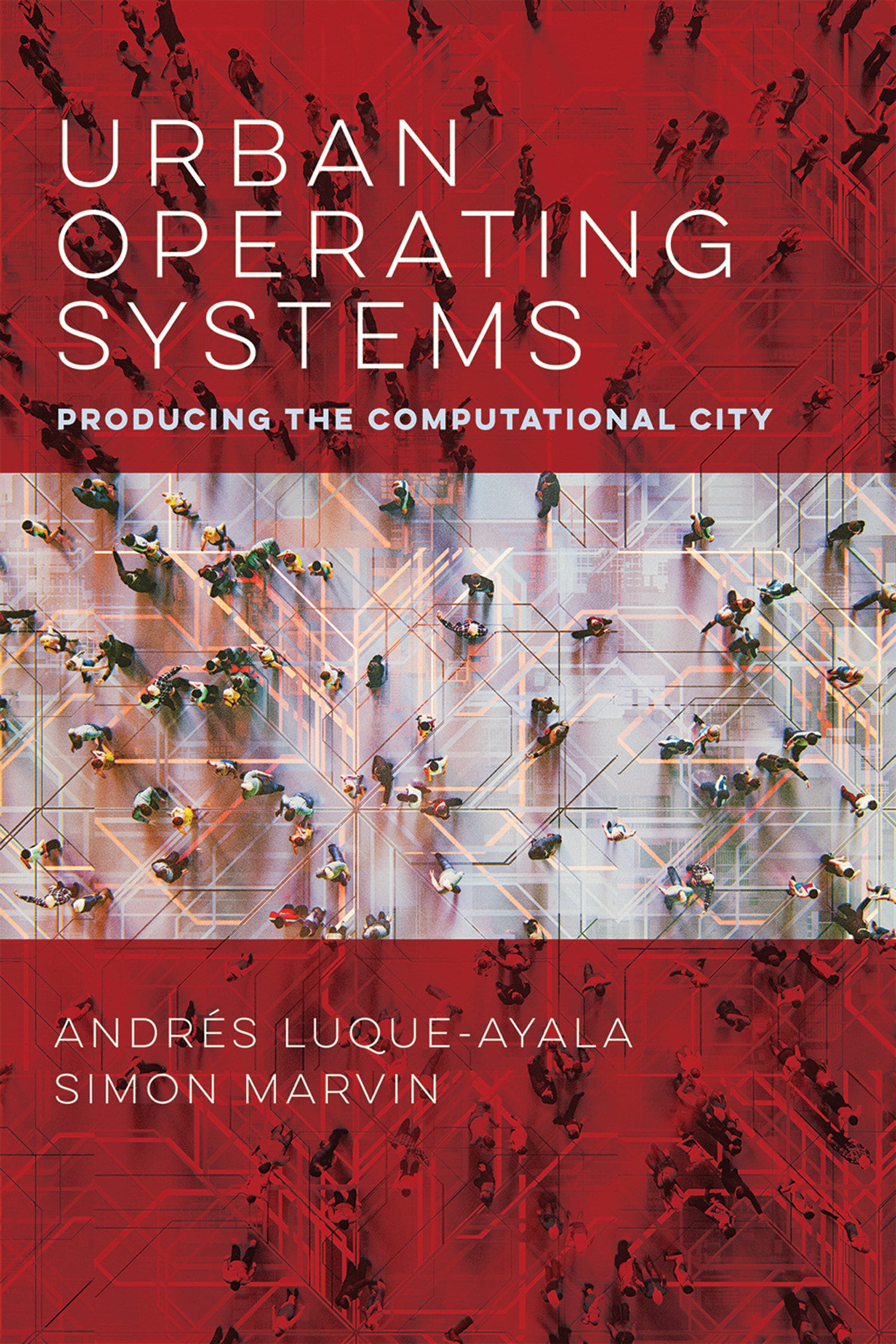
Urban Operating Systems: Producing the Computational City
30.00 JOD
Please allow 2 – 5 weeks for delivery of this item
Description
A new wave of enthusiasm for smart cities, urban data, and the Internet of Things has created the impression that computation can solve almost any urban problem. Subjecting this claim to critical scrutiny, in this book, Andrés Luque-Ayala and Simon Marvin examine the cultural, historical, and contemporary contexts in which urban computational logics have emerged. They consider the rationalities and techniques that constitute emerging computational forms of urbanization, including work on digital urbanism, smart cities, and, more recently, platform urbanism. They explore the modest potentials and serious contradictions of reconfiguring urban life, city services, and urban-networked infrastructure through computational operating systems—an urban OS.Luque-Ayala and Marvin argue that in order to understand how digital technologies transform and shape the city, it is necessary to analyze the underlying computational logics themselves. Drawing on fieldwork that stretches across eleven cities in American, European, and Asian contexts, they investigate how digital products, services, and ecosystems are reshaping the ways in which the city is imagined, known, and governed. They discuss the reconstitution of the contemporary city through digital technologies, practices, and techniques, including data-driven governance, predictive analytics, digital mapping, urban sensing, digitally enabled control rooms, civic hacking, and open data narratives. Focusing on the relationship between the emerging operating systems of the city and their traditional infrastructures, they shed light on the political implications of using computer technologies to understand and generate new urban spaces and flows.
Additional information
| Weight | 0.47 kg |
|---|---|
| Dimensions | 1.76 × 15.24 × 22.86 cm |
| PubliCanadanadation City/Country | USA |
| ISBN 10 | 0262539810 |
| About The Author | Andrés Luque-Ayala is Associate Professor in the Department of Geography at Durham University, UK. Simon Marvin is Director of The Urban Institute at the University of Sheffield, UK. |
| Other text | “Urban Operating Systems offers the essential synthesis that so many analyses have missed. It combines a history of modern digital utopias with a contemporary field guide to messier collisions between computational ecosystems in urban space.”–Kate Easterling, Professor, Yale School of Architecture “Luque-Ayala and Marvin bring alive the concept of urban operating systems through their expansive and in-depth research. From hacking and sensing to datafication and prediction, their work makes a crucial contribution to understanding—and transforming—computational cities.”–Jennifer Gabrys, Chair in Media, Culture, and Environment, University of Cambridge “A theoretically nuanced, empirically rich, historically grounded, and accessible account of the development of the computational city. Urban Operating Systems provides an essential guide to how digital technologies have reshaped urban imaginations, infrastructure, governance, and governmentality.”–Rob Kitchin, National University of Ireland, Maynooth “Through this incisive study, Luque-Ayala and Marvin allow us to revisit our cities through the functional logics of their operating systems, and to consider how our own human means of sensing and processing and circulating map onto the ways intelligent machines accomplish similar tasks.”–Shannon Mattern, Professor of Anthropology, The New School; author of Code and Clay, Data and Dirt? |
| Table Of Content | Acknowledgments vii Chapter Credits xi 1 Introduction: Producing the Computational City 1 2 Operationalization: Diagramming the City through the Urban OS 27 3 Datafication: The Making of Data-as-Infrastructure 55 4 Sensing: Commodification through Hyperfragmentation 81 5 Mapping: The Computational Production of Territory 105 with Flávia Neves Maia 6 Prediction: The City as a Calculative Machine 129 7 Circulation: Maintaining Urban Flows under Turbulence 149 8 Resistance? Civic Hacking and an Operating System for Urban Occupation 177 9 Conclusion: The Urban OS as a Political Technology 209 Notes 225 References 237 Index 271 |
Only logged in customers who have purchased this product may leave a review.
Related products
![]()
On backorder 2-5 Weeks to Arrive
6.99 JOD![]()
On backorder 2-5 Weeks to Arrive
15.99 JOD![]()
On backorder 2-5 Weeks to Arrive
13.00 JOD![]()
On backorder 2-5 Weeks to Arrive
15.99 JOD




Reviews
There are no reviews yet.