
Loading cart contents...
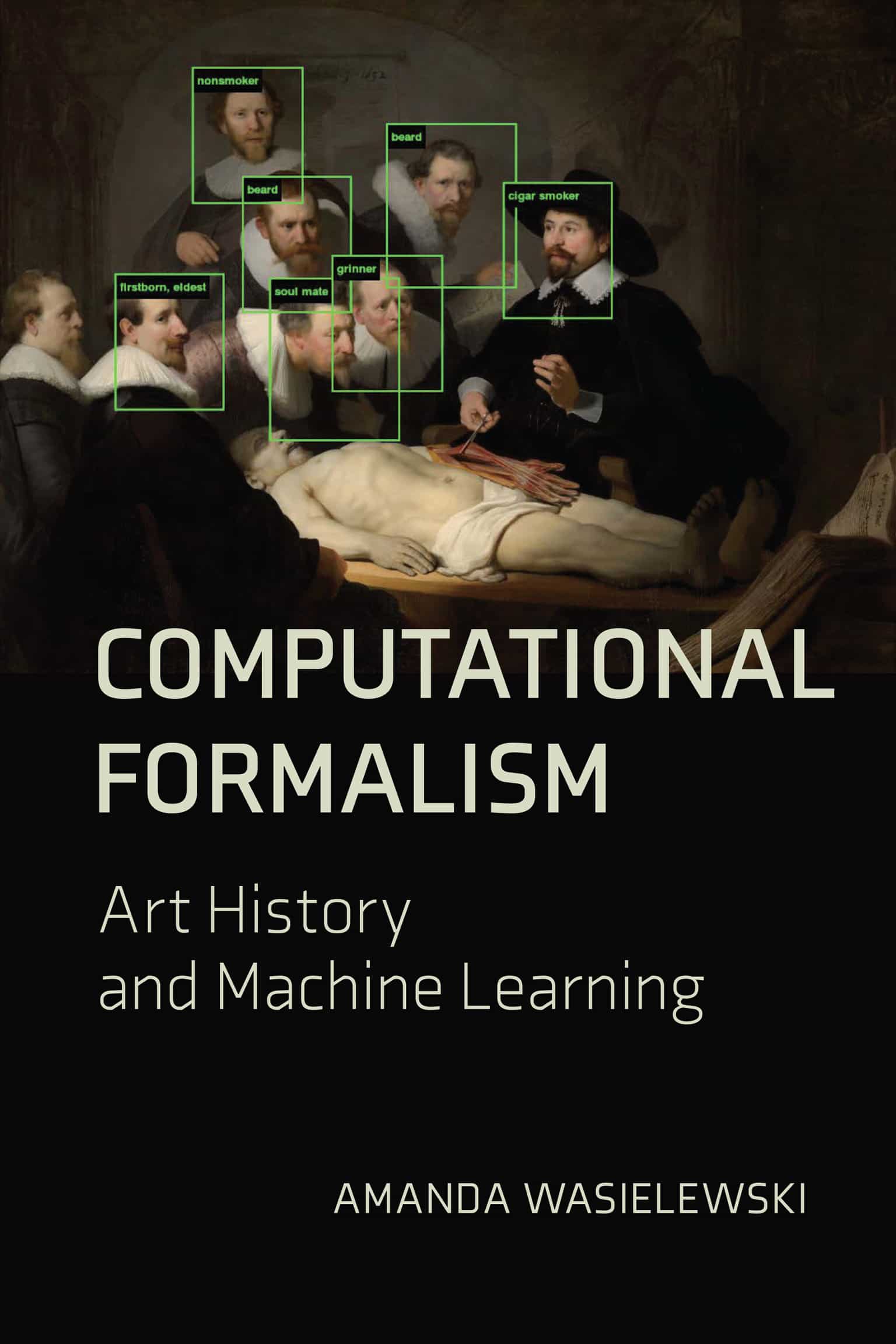
Art History and Machine Learning: Computational Formalism
40.00 JOD
Please allow 2 – 5 weeks for delivery of this item
Description
How the use of machine learning to analyze art images has revived formalism in art history, presenting a golden opportunity for art historians and computer scientists to learn from one another.Though formalism is an essential tool for art historians, much recent art history has focused on the social and political aspects of art. But now art historians are adopting machine learning methods to develop new ways to analyze the purely visual in datasets of art images. Amanda Wasielewski uses the term “computational formalism” to describe this use of machine learning and computer vision technique in art historical research. At the same time that art historians are analyzing art images in new ways, computer scientists are using art images for experiments in machine learning and computer vision. Their research, says Wasielewski, would be greatly enriched by the inclusion of humanistic issues.The main purpose in applying computational techniques such as machine learning to art datasets is to automate the process of categorization using metrics such as style, a historically fraught concept in art history. After examining a fifteen-year trajectory in image categorization and art dataset creation in the fields of machine learning and computer vision, Wasielewski considers deep learning techniques that both create and detect forgeries and fakes in art. She investigates examples of art historical analysis in the fields of computer and information sciences, placing this research in the context of art historiography. She also raises questions as which artworks are chosen for digitization, and of those artworks that are born digital, which works gain acceptance into the canon of high art.
Additional information
| Weight | 0.32915 kg |
|---|---|
| Dimensions | 1.2192 × 15.24 × 22.86 cm |
| Publication City/Country | USA |
| ISBN 10 | 0262545640 |
| About The Author | Amanda Wasielewski is Assistant Professor in Digital Humanities at Uppsala University. She is the author of Made in Brooklyn: Artists, Hipsters, Makers, Gentrifiers and From City Space to Cyberspace: Art, Squatting, and Internet Culture in the Netherlands. |
| Other text | “Reimagining the relationships between art history and computer science, Wasielewski's lucid book manages to be uniquely engaging, important, and accessible to both communities.”—Leonardo Impett, Assistant Professor of Digital Humanities, Cambridge University |
| Table Of Content | Series Foreword ixAcknowledgments xiIntroduction: Return to Form 1Machine Learning and Computer Vision 3The New Science Wars 11Digital Art History 16Objectivity and Cultural Studies 22Art History and Objectivity 25Computational Formalism 30Questions of Style 341 The Shape of Data 39Digitization and Dataset Creation 42The Semantic Gap 49Artificial ArtHistorian 51Image Selection 60Image Categorization 67Stylistic Determinism 75Style Unsupervised 79Stylistic Devices 842 Deep Connoisseurship 87Cat, Dog, or Virgin Mary? 92Value, Fame, and the Artist's Hand 95Opening the Black Box 101The Business of Authenticity 107Next-Level Forgeries and Fakes 115An Artificial Artist? 119Poor Images 1243 Conclusion: Man, Machine, Metaphor 127The Rise of the Humanities Lab 133Foreign Metaphors as Interdisciplinary Tool 135Appendix: Classification by Artistic Style, Publications in Computer Science, 2005-2021, Including the Development and Utilization of Fine Art Datasets 139Notes 145Index 177 |
Only logged in customers who have purchased this product may leave a review.
Related products
![woocommerce-placeholder-558x558.png]()
Low stock
![]()
On backorder 2-5 Weeks to Arrive
![woocommerce-placeholder-558x558.png]()
Low stock
18.99 JOD![]()
On backorder 2-5 Weeks to Arrive
7.99 JOD


Reviews
There are no reviews yet.