
Loading cart contents...
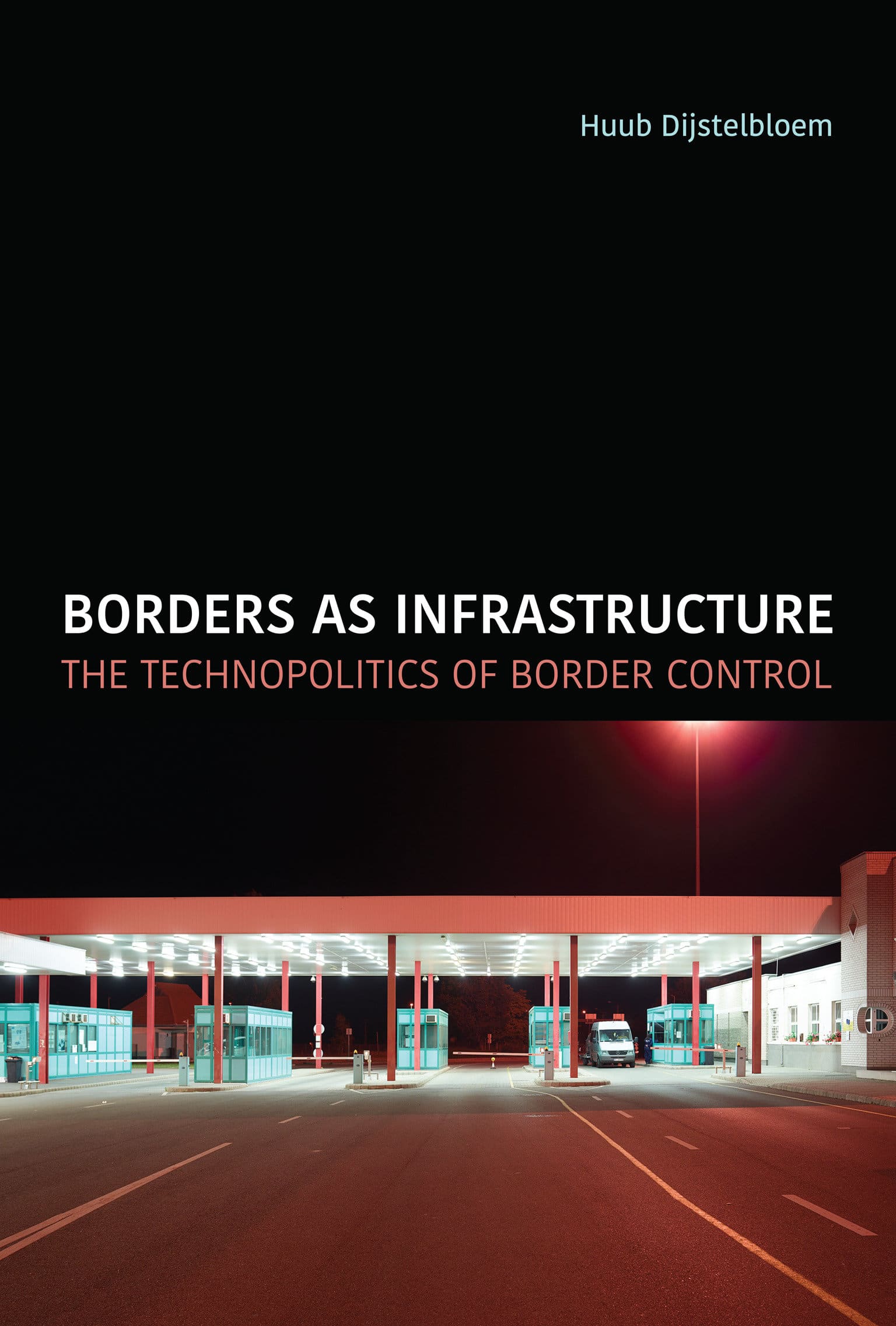
Borders as Infrastructure: The Technopolitics of Border Control
41.00 JOD
Please allow 2 – 5 weeks for delivery of this item
Description
An investigation of borders as moving entities that influence our notions of territory, authority, sovereignty, and jurisdiction.In Borders as Infrastructure, Huub Dijstelbloem brings science and technology studies, as well as the philosophy of technology, to the study of borders and international human mobility. Taking Europe’s borders as a point of departure, he shows how borders can transform and multiply and and how they can mark conflicts over international orders. Borders themselves are moving entities, he claims, and with them travel our notions of territory, authority, sovereignty, and jurisdiction. The philosophies of Bruno Latour and Peter Sloterdijk provide a framework for Dijstelbloem’s discussion of the material and morphological nature of borders and border politics.Dijstelbloem offers detailed empirical investigations that focus on the so-called migrant crisis of 2014-2016 on the Greek Aegean Islands of Chios and Lesbos; the Europe surveillance system Eurosur; border patrols at sea; the rise of hotspots and “humanitarian borders”; the technopolitics of border control at Schiphol International Airport; and the countersurveillance by NGOs, activists, and artists who investigate infrastructural border violence. Throughout, Dijstelbloem explores technologies used in border control, including cameras, databases, fingerprinting, visual representations, fences, walls, and monitoring instruments. Borders can turn places, routes, and territories into “zones of death.” Dijstelbloem concludes that Europe’s current relationship with borders renders borders–and Europe itself–an “extreme infrastructure” obsessed with boundaries and limits.
Additional information
| Weight | 0.47 kg |
|---|---|
| Dimensions | 1.73 × 15.24 × 22.86 cm |
| PubliCanadation City/Country | USA |
| ISBN 10 | 0262542889 |
| About The Author | Huub Dijstelbloem is Professor of Philosophy of Science and Politics at the University of Amsterdam and Senior Researcher at the Netherlands Scientific Council for Government Policy in The Hague. |
| Other text | “Infrastructure connects and so does this excellent book. Bridging the philosophical, the technical, and the political, this original work will be indispensable reading for anyone concerned about the power of bordering today.”—William Walters, Professor of Political Sociology, Carleton University, Canada; author of State Secrecy and Security “A searing account of the deep violences of Europe's border infrastructures. From the technologies mediating contemporary migration to new regimes of vision at the border, Dijstelbloem offers a compelling interweaving of technological landscapes and migration stories.”—Louise Amoore, Professor of Political Geography, Durham University, UK; author of Cloud Ethics “Originally designed and carefully written, Borders as Infrastructure succeeds in addressing contemporary transnational mobility as generative of actors, institutions, and technologies. As such, it contributes to a pressing collective endeavor.”—Annalisa Pelizza, Full Professor of Science and Technology Studies, University of Bologna; PI of the Processing Citizenship research program |
| Table Of Content | Preface1 The Border as a Vehicle2 The Rise of Europe's Border Infrastructures3 The Shape of Technopolitics4 Detection, Detention, and Design at the Airport5 Surveilling Landscapes and Seascapes 6 The Portable Provision of Care and Control7 Infrastructural Investigations8 Extreme InfrastructureCodaNotesReferencesIndex |
Only logged in customers who have purchased this product may leave a review.
Related products
![]()
On backorder 2-5 Weeks to Arrive
![]()
On backorder 2-5 Weeks to Arrive
![Weapons of Math Destruction: How Big Data Increases Inequality and Threatens Democracy]()
On backorder 2-5 Weeks to Arrive
![]()
On backorder 2-5 Weeks to Arrive




Reviews
There are no reviews yet.