
Loading cart contents...
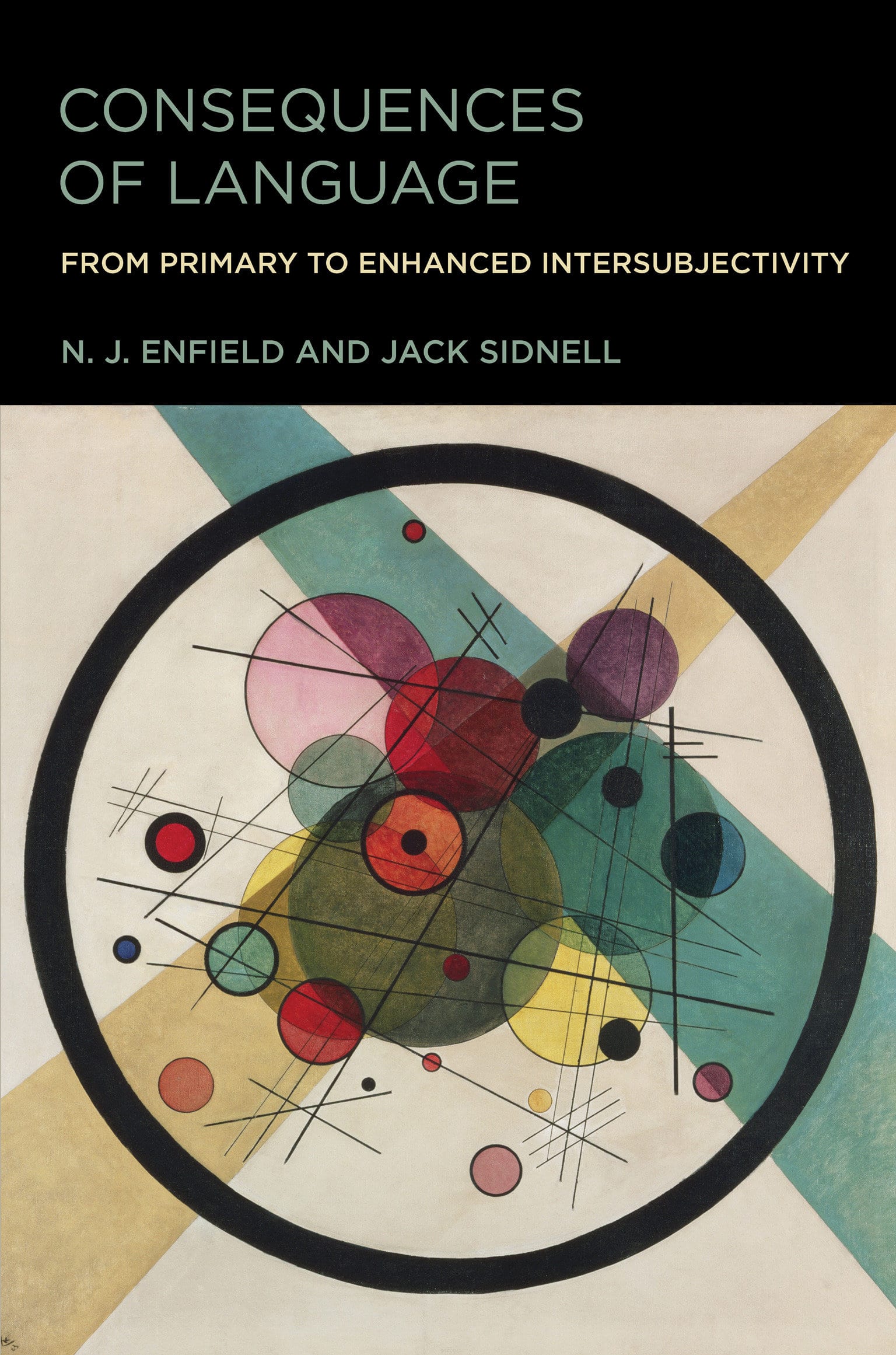
Consequences of Language: From Primary to Enhanced Intersubjectivity
45.00 JOD
Please allow 2 – 5 weeks for delivery of this item
Description
What is it about humans that makes language possible, and what is it about language that makes us human?If you are reading this, you have done something that only our species has evolved to do. You have acquired a natural language. This book asks, How has this changed us? Where scholars have long wondered what it is about humans that makes language possible, N. J. Enfield and Jack Sidnell ask instead, What is it about humans that is made possible by language? In Consequences of Language their objective is to understand what modern language really is and to identify its logical and conceptual consequences for social life. Central to this undertaking is the concept of intersubjectivity, the open sharing of subjective experience. There is, Enfield and Sidnell contend, a uniquely human form of intersubjectivity, and it is essentially intertwined with language in two ways: a primary form of intersubjectivity was necessary for language to have begun evolving in our species in the first place and then language, through its defining reflexive properties, transformed the nature of our intersubjectivity. In the authors’ analysis, social accountability—the bedrock of society—is grounded in this linguistically transformed, enhanced kind of intersubjectivity.The account of the language-mind-society connection put forward in Consequences of Language is one of unprecedented reach, suggesting new connections across disciplines centrally concerned with language—from anthropology and philosophy to sociology and cognitive science—and among those who would understand the foundational role of language in making us human.
Additional information
| Weight | 0.41 kg |
|---|---|
| Dimensions | 1.60 × 15.24 × 4.09 cm |
| Publication City/Country | USA |
| ISBN 10 | 0262544865 |
| About The Author | N. J. Enfield is Professor of Linguistics at the University of Sydney and Director of the Sydney Centre for Language Research. Jack Sidnell is Professor of Anthropology at the University of Toronto. |
| Other text | “Outstanding. Consequences of Language builds on the authors’ individual and joint work to offer meaningful developments of their perspectives on the relationship between language and social organization. It will be of interest to linguists working in a range of sub-disciplines of this field, and to researchers using concepts derived from conversation analysis.” —Dr. Scott Barnes, Department of Linguistics, Macquarie University, Australia “A high-quality, original contribution, this book represents a substantial engagement with the topic of intersubjectivity relating to language. I am certain that this book will make a significant contribution to both anthropology and linguistics.”—Dr. Charlotte Marie Bisgaard Klemmensen, Department of Communication and Psychology, Aalborg University “Consequences of Language is very well written and the point that language is central to the 'enhanced intersubjectivity' possible in human interaction in contrast to the 'primary intersubjectivity' possible in interaction between sentients (including primates) is well made. Indeed, I found myself agreeing with the authors throughout the book.”—Michael Haugh, Professor, School of Languages and Cultures, The University of Queensland, Australia |
| Table Of Content | Preface ixAcknowledgments xiOverture1 Intersubjectivity, Activity, Accountability 3I Prerequisities for Language2 Status and the Tyranny of Accountability 353 Participation and Reciprocal Involvement 554 Enchrony and the Semiotic Bottleneck 79II Elements of Language 5 Reference for Shared Intentionality 1076 Semantics for Accountable Description 1357 Grammar for Intersubjectivity 153Postlude8 Conditions and Consequences of Language 179Notes 189References 205Index 235 |
Only logged in customers who have purchased this product may leave a review.
Related products
![]()
On backorder 2-5 Weeks to Arrive
![]()
On backorder 2-5 Weeks to Arrive
![]()
On backorder 2-5 Weeks to Arrive
15.99 JOD![]()
On backorder 2-5 Weeks to Arrive




Reviews
There are no reviews yet.