
Loading cart contents...
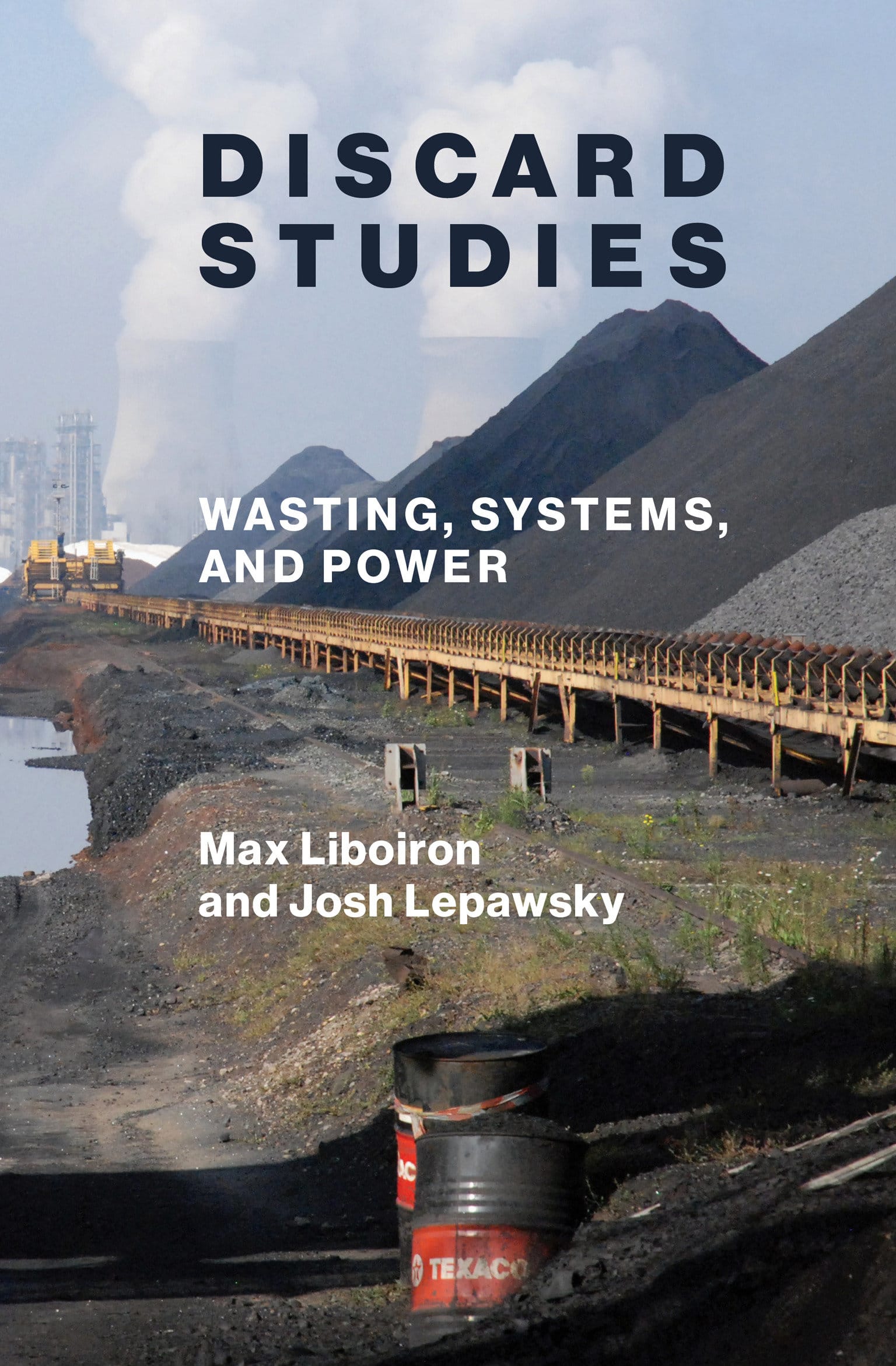
Discard Studies: Wasting, Systems, and Power
30.00 JOD
Please allow 2 – 5 weeks for delivery of this item
Description
An argument that social, political, and economic systems maintain power by discarding certain people, places, and things.Discard studies is an emerging field that looks at waste and wasting broadly construed. Rather than focusing on waste and trash as the primary objects of study, discard studies looks at wider systems of waste and wasting to explore how some materials, practices, regions, and people are valued or devalued, becoming dominant or disposable. In this book, Max Liboiron and Josh Lepawsky argue that social, political, and economic systems maintain power by discarding certain people, places, and things. They show how the theories and methods of discard studies can be applied in a variety of cases, many of which do not involve waste, trash, or pollution. Liboiron and Lepawsky consider the partiality of knowledge and offer a theory of scale, exploring the myth that most waste is municipal solid waste produced by consumers; discuss peripheries, centers, and power, using content moderation as an example of how dominant systems find ways to discard; and use theories of difference to show that universalism, stereotypes, and inclusion all have politics of discard and even purification—as exemplified in “inclusive” efforts to broaden the Black Lives Matter movement. Finally, they develop a theory of change by considering “wasting well,” outlining techniques, methods, and propositions for a justice-oriented discard studies that keeps power in view.
Additional information
| Weight | 0.30 kg |
|---|---|
| Dimensions | 1.42 × 13.34 × 3.66 cm |
| Publication City/Country | USA |
| ISBN 10 | 0262543656 |
| About The Author | Max Liboiron is Associate Professor of Geography at Memorial University of Newfoundland and Labrador and the author of Pollution is Colonialism. Josh Lepawsky is Professor of Geography at Memorial University of Newfoundland and Labrador and the author of Reassembling Rubbish (MIT Press). |
“Discard Studies is a valuable pedagogical tool. It flows like poetry, painting a vivid and insightful perspective without being overtly dense. Apart from accessibility, this book posits a new methodological imperative that is doable… Dismantling power structures is not a one-way process; Discard Studies shows that we can rebuild only by constantly challenging the power structures we have inherited. [O]ne of those books that you will want to sit with and let occupy your being for a while, if not forever.”—H-Net Reviews | |
| Other text | “Discard Studies is an innovative framework for understanding structures, systems, and histories of injustice, environmental and otherwise. As Liboiron and Lepawsky make clear in this important, timely, and accessible work, it is a perspective we urgently need.” —Robin Nagle, Clinical Professor of Anthropology and Environmental Studies, New York University; author of Picking Up “Profoundly insightful, important, and provocative, Discard Studies reveals how dominant systems maintain power through discarding and offers an inspiring theory of change.” —Alice Mah, Professor of Sociology, University of Warwick; author of Plastic Unlimited “This generous book poses tough questions about scale, power, difference, and change. Discard Studies is for readers concerned with ecology and material justice in a violent world.” —Samantha MacBride, Adjunct Assistant Professor of Public Affairs, Baruch College of the City University of New York; author of Recycling Reconsidered “In Discard Studies, Liboiron and Lepawksy accomplish the seemingly impossible: a brilliant, entertaining, theoretically engaged, and accessible introduction to a field of vast importance. Read this! Even better, assign it to students.” —Nancy Langston, Distinguished Professor of Environmental History, Michigan Technological University; author of Climate Ghosts |
| Table Of Content | Acknowledgments vii1 An Introduction to Discard Studies 12 The Scales of Waste: A Theory of Relationality 353 Insides and Outsides: A Theory of Power 614 There's No Such Thing as We: A Theory of Difference 975 Discarding Well: A Theory of Change 125References 153Index 195 |
Only logged in customers who have purchased this product may leave a review.
Related products
![]()
On backorder 2-5 Weeks to Arrive
![]()
On backorder 2-5 Weeks to Arrive
![]()
On backorder 2-5 Weeks to Arrive
15.99 JOD![]()
On backorder 2-5 Weeks to Arrive




Reviews
There are no reviews yet.