
Loading cart contents...
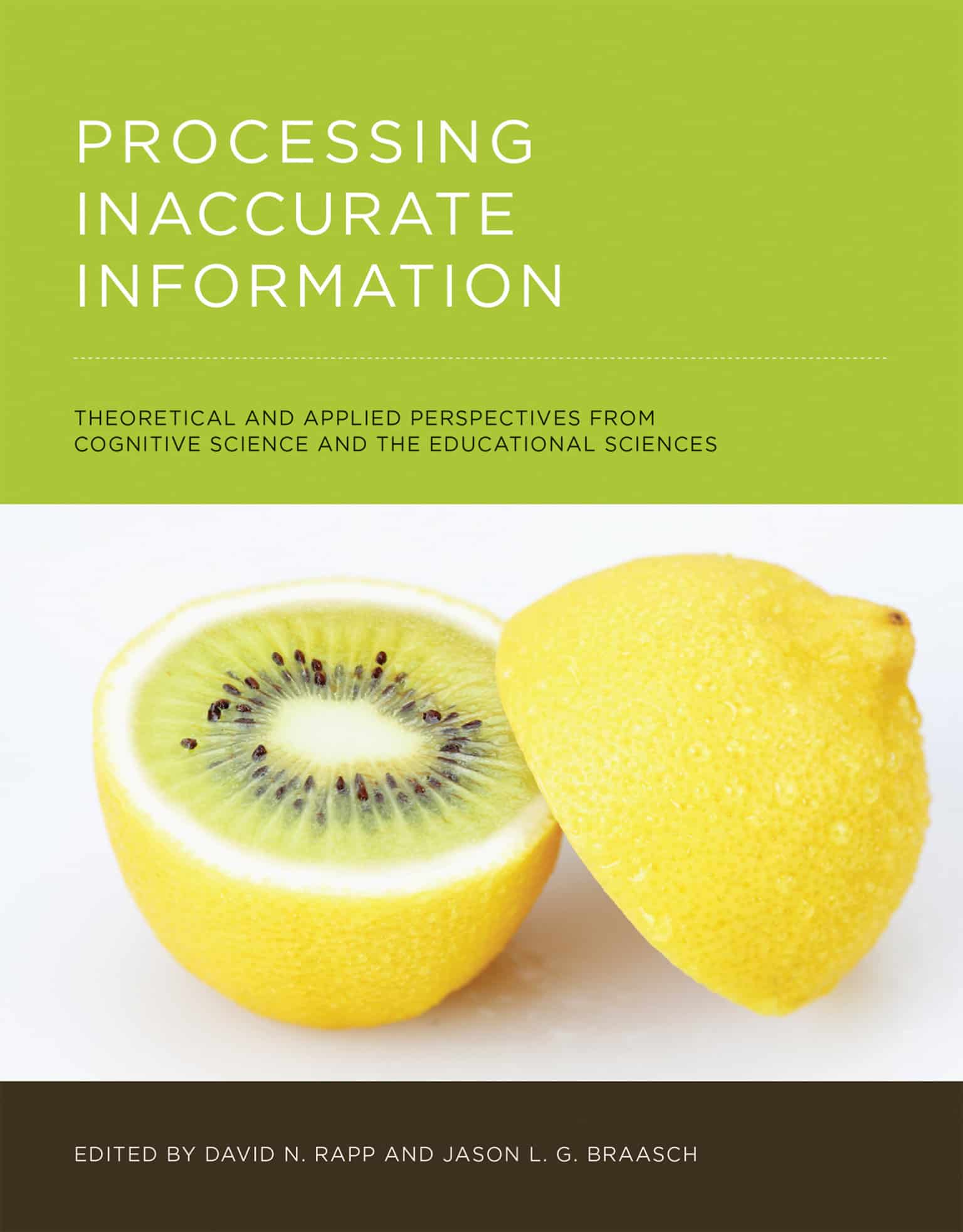
Processing Inaccurate Information: Theoretical and Applied Perspectives from Cognitive Science and the Educational Sciences
45.00 JOD
Please allow 2 – 5 weeks for delivery of this item
Description
Interdisciplinary approaches to identifying, understanding, and remediating people’s reliance on inaccurate information that they should know to be wrong.Our lives revolve around the acquisition of information. Sometimes the information we acquire—from other people, from books, or from the media—is wrong. Studies show that people rely on such misinformation, sometimes even when they are aware that the information is inaccurate or invalid. And yet investigations of learning and knowledge acquisition largely ignore encounters with this sort of problematic material. This volume fills the gap, offering theoretical and empirical perspectives on the processing of misinformation and its consequences.The contributors, from cognitive science and education science, provide analyses that represent a variety of methodologies, theoretical orientations, and fields of expertise. The chapters describe the behavioral consequences of relying on misinformation and outline possible remediations; discuss the cognitive activities that underlie encounters with inaccuracies, investigating why reliance occurs so readily; present theoretical and philosophical considerations of the nature of inaccuracies; and offer formal, empirically driven frameworks that detail when and how inaccuracies will lead to comprehension difficulties.Contributors Peter Afflerbach, Patricia A. Alexander, Jessica J. Andrews, Peter Baggetta, Jason L. G. Braasch, Ivar Bråten, M. Anne Britt, Rainer Bromme, Luke A. Buckland, Clark A. Chinn, Byeong-Young Cho, Sidney K. D’Mello, Andrea A. diSessa, Ullrich K. H. Ecker, Arthur C. Graesser, Douglas J. Hacker, Brenda Hannon, Xiangen Hu, Maj-Britt Isberner, Koto Ishiwa, Matthew E. Jacovina, Panayiota Kendeou, Jong-Yun Kim, Stephan Lewandowsky, Elizabeth J. Marsh, Ruth Mayo, Keith K. Millis, Edward J. O’Brien, Herre van Oostendorp, José Otero, David N. Rapp, Tobias Richter, Ronald W. Rinehart, Yaacov Schul, Colleen M. Seifert, Marc Stadtler, Brent Steffens, Helge I. Strømsø, Briony Swire, Sharda Umanath
Additional information
| Weight | 0.368875 kg |
|---|---|
| Dimensions | 17.78 × 22.86 cm |
| Publication City/Country | USA |
| ISBN 10 | 0262547686 |
| About The Author | David N. Rapp is Associate Professor of Cognitive Psychology at Northwestern University.Jason L. G. Braasch is Assistant Professor of Cognitive Psychology at the University of Memphis. |
| Table Of Content | Acknowledgments viiContributors ix1 Accurate and Inaccurate Knowledge Acquisition 1David N. Rapp and Jason L. G. BraaschI Detecting and Dealing with Inaccuracies 112 Correcting Misinformation–A Challenge for Education and Cognitive Science 13Ullrich K. H. Ecker, Briony Swire, and Stephan Lewandowsky 3 The Continued Influence Effect: The Persistence of Misinformation in Memory and Reasoning Following Correction 39Colleen M. Seifert4 Failures to Detect Textual Problems during Reading 73Douglas J. Hacker5 Research on Semantic Illusions Tells Us That There Are Multiple Sources of Misinformation 93Brenda Hannon6 Sensitivity to Inaccurate Argumentation in Health News Articles: Potential Contributions of Readers' Topic and Epistemic Beliefs 117Jason L. G. Braasch, Ivar Braten, M. Anne Britt, Brent Steffens, and Helge I. Stromso7 Conversational Agents Can Help Humans Identify Flaws in the Science Reported in Digital Media 139II Mechanisms of Inaccurate Knowledge Acquisition 1598 Knowledge Neglect: Failures to Notice Contradictions with Stored KnowledgeElizabeth J. Marsh and Sharda Umanath 1619 Mechanisms of Problematic Knowledge Acquisition 181David N. Rapp, Matthew E. Jacovina, and Jessica J. Andrews 10 Discounting Information: When False Information Is Preserved and When It Is Not 203Yaacov Schul and Ruth Mayo11 The Ambivalent Effect of Focus on Updating Mental Representations 223Herre van Oostendorp12 Comprehension and Validation: Separable Stages of Information Processing? A Case for Episetemic Monitoring in Language Comprehension 245III Epistemological Groundings 27713 An Epistemological Perspective on Misinformation 279Andrea A. diSessa14 Percept-Concept Coupling and Human Error 297Patricia A. Alexander and Peter Baggetta15 Cognitive Processing of Conscious Ignorance 329Jose Otero and Koto IshiwaIV Emerging Models and Frameworks 35116 The Knowledge Revision Components (KReC) Framework: Processes and Mechanisms 353Panayiota Kendeou and Edward J. O'Brien17 The Content-Source Integration Model: A Taxonomic Description of How Readers Comprehend Conflicting Scientific Information 397Marc Stadtler and Rainer Bromme18 Inaccuracy and Reading in Multiple Text and Internet/Hypertext Environments 403Peter Afflerbach, Byeong-Young Cho, and Jong-Yun Kim19 Epistemic Cognition and Evaluating Information: Applying the AIR Model of Epistemic Cognition 425Clark A. Chinn, Ronald W. Rinehart, and Luke A. BucklandIndex 455 |
Only logged in customers who have purchased this product may leave a review.
Related products
![]()
On backorder 2-5 Weeks to Arrive
![]()
On backorder 2-5 Weeks to Arrive
7.99 JOD![]()
On backorder 2-5 Weeks to Arrive
15.99 JOD![]()
On backorder 2-5 Weeks to Arrive
15.99 JOD




Reviews
There are no reviews yet.