
Loading cart contents...
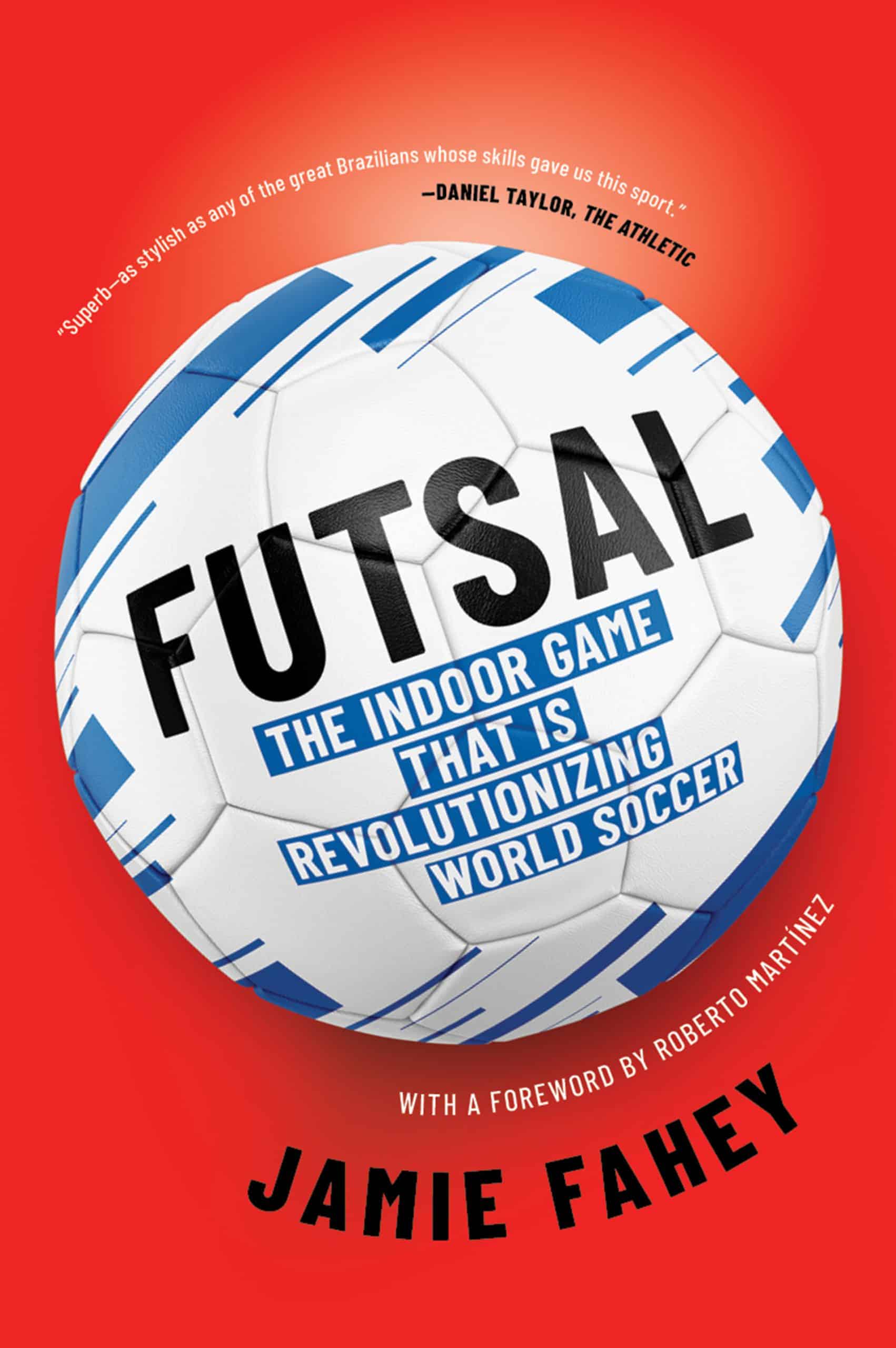
The Indoor Game That Is Revolutionizing World Soccer: Futsal
16.99 JOD
Please allow 2 – 5 weeks for delivery of this item
Description
“All the best players began with futsal!” – Pelé “If it wasn’t for futsal, I wouldn’t be the player I am today.” — Cristiano Ronaldo The untold story of soccer’s little brother futsal, the grassroots game that is the secret behind the success of Pelé, Neymar, Messi, Ronaldo and the US star Christian Pulisic Futsal, a form of indoor soccer, is one of the fastest growing sports in the world. Jamie Fahey uncovers its global stories, tactical innovations and fascinating history and reveals its the secret behind the success of the likes of Brazilians Ronaldhino, Ronaldo Fenômeno and Romario and the kind of soccer revolutionized by Pep Guardiola at Barcelona – with Spain’s Xavi Hernández and Andrés Iniesta – and at Manchester City, with Belgium’s Kevin De Bruyne and Brazilian goalkeeper Ederson. As Brazilian superstar Neymar said: ‘It has developed my technique, quick thinking and short moves…Futsal is fundamental to a footballer’s life. It had a big importance in mine. When you’re out there playing, you’re forced to think fast and move even faster – if you lose a second, then the ball will be gone.” Born in Uruguay almost a century ago but raised to an art form in Brazil, futsal is one of the fastest-growing sports on the planet: over 60 million people play this lightning-fast and tactically intricate variation of indoor soccer, which is also a bona fide professional sport in its own right. Despite its growing status, however, futsal’s history remains largely unknown and untold. Jamie Fahey is a leading futsal expert and qualified youth coach. He spent his childhood playing endless soccer matches in the shattered urban landscape of 1980s Liverpool – on the same streets later graced by Wayne Rooney, the ‘last true street footballer’. Yet when Fahey’s own soccer career stalled, he realised he had been unwittingly learning the skills that pointed to his true passion. In Futsal: The Indoor Game Revolutionizing World Soccer, Fahey makes the case for futsal’s transformative grassroots effect, both in the UK and abroad. He also tells the story of futsal’s politics, tactics and personalities – and in doing so, illuminates a hidden corner of sporting history.
Additional information
| Weight | 0.266725 kg |
|---|---|
| Dimensions | 2.032 × 12.6492 × 19.558 cm |
| Pages | 304 |
| Language | |
| Format Old` | |
| Imprint | |
| Publisher | |
| Year Published | 2022-8-2 |
| by | |
| Publication City/Country | USA |
| ISBN 10 | 1612199801 |
| About The Author | Jamie Fahey is a Guardian journalist and production editor who has also been involved with futsal for nearly two decades, both as player and coach. He is the paper's primary reporter on the sport and considered a world expert. Futsal is his first book.Roberto Martínez is one of the world’s most revered football coaches. Previous honours have included a League One title with Swansea City, and a famous 1-0 FA Cup win over Manchester City with Wigan Athletic in 2013. He managed Everton between 2013 and 2016, and is the current manager of the Belgian national team. |
| Excerpt From Book | Kick-off is minutes away. The persistent breeze is no more than a decoy, the steady bluster of warm air proving every bit as deceptive as the artistic magicians about to adorn the glistening green canvas on a searing summer’s day in Texas. Vivid memories of the cooling rain shower outside the Dallas Cotton Bowl an hour ago have long since faded. Inside the stadium, the temperature is on the rise. It’s Brazil versus the Netherlands. The samba elegance of Pelé against the totaalvoetbal of Cruyff. Rivellino versus Neeskens. Mário Zagallo versus Rinus Michels. This afternoon, in July 1994, it’s Romario versus Bergkamp. A World Cup quarterfinal in front of 63,500 giddy souls, nakedly exposed in the roofless arena, and countless millions glued to televisions around the world. “There he is,” points Paddy O’Brien. “That’s him…” My friend and fellow street footballing urchin from Liverpool stares excitedly beyond the two starting 11s emerging into the sunshine from the arena’s innards. It certainly looks like him, trailing along behind, with the substitutes. Ronaldo, we think he’s called. We’ve read the stories, seen the pictures in the papers. He’s the coming man—or gawky teenage boy—of Brazilian soccer.In truth, we’d been hoping to see Ireland play Brazil. Our Liverpudlian-Irish roots run deep. But the Dutch made it instead. We’re not complaining. Just desperate to witness the latest Brazilian prodigy take to the immaculate Cotton Bowl turf freshly laid for the first-ever FIFA men’s football World Cup staged outside Europe or South America. Brazil didn’t need him. They triumphed 3–2. Romário stole the show, grabbing the opening goal then later joining Bebeto for the famous baby-cradling celebration in the corner of the ground we were fortunate enough to be applauding. The tournament climaxed eight days later with Brazil taking a historic fourth title. But what's all this got to do with futsal? It’s about the story. About a time, 1994, and a place—the United States—that capture the essential spirit of this book.The Ronaldo moment is a personal snapshot. A time-stamped sporting illustration of many details explored in these chapters: the surging influence on eleven-a-side soccer of futsal, freshly anointed as FIFA’s small-sided game of choice in the early 1990s; the role of Brazil in the evolution of both sports; my reflections as a touring street soccer refugee from Liverpool; and of course, the vast potential for growth of futsal in the United States and elsewhere. Then and now. Not only did Paddy and I watch the peak of one generation of futsal-formed Brazilians, the Romário era, give way to the awkward teenage embodiment of the next. We also witnessed the second coming of US soccer, a decade after the North American Soccer League’s top-dollar roller-coaster juggernaut—with the likes of Pelé, George Best, and Franz Beckenbauer on board—came to a juddering halt. USA 94 gave birth to the Major League Soccer, the league kicking off in 1996 after being a key plank of US Soccer’s World Cup bid. The US women’s game was already on top of the world, the culmination of a quiet revolution by a charismatic coach called Anson Dorrance. Born in Mumbai, India, Dorrance led the US national team to glory in the first women’s World Cup in 1991, just six years after combining the role with his day job as resident talent-whisperer for the North Carolina college team, the Tar Heels. Firing the players’ motivation in what he calls his “competitive cauldron,” Dorrance bred a generation schooled in the arts of high-pressing and robust one-versus-one excellence. There was more to it though. “I’ve had my players play futsal forever,” he told soccertoday.com in 2020, citing 1990s stars, such as Mia Hamm and Kristine Lilly, and their 21st-century counterparts Crystal Dunn and Tobin Heath, as players who became “masters of the ball” with the aid of regular jousts in the small-sided game. Another of Dorrance’s Tar Heels stars, midfielder Allie Long, hails the calmness and creativity honed in futsal as her “secret weapon” in 11-a-side. It’s the key to the US women maintaining a “dynastic dominance” in global soccer, Dorrance says.The men’s game reached its own significant milestone just four years after my Dallas day in the sun. September 18, 1998 was the day Ronaldo Fenomeno came of age, celebrating his 22nd birthday in Italy while shining at Inter Milan after tracing Romário’s pathway from PSV in the Netherlands to Barcelona. It’s also the day the future of US soccer was born. The day Mark and Kelley Pulisic—two former soccer stars at George Mason college in Virginia—bequeathed to the nation the boy hailed as “Captain America” two decades later for leading the US national team to the Qatar World Cup finals in 2022. Christian Pulisic and Ronaldo share more than a birthday, however. The story goes that Mark Pulisic, a prolific goal-scoring midfielder for Harrisburg Heat in the six-a-side indoor National Professional Soccer League throughout the 1990s, vowed to expose young Christian to futsal while coaching the Detroit Ignition men’s indoor team, such was his regard for the futsal-formed Brazilian ball masters in his squad. The problem was there were no youth futsal leagues. So coach Pulisic set one up, giving seven-year-old Christian vital exposure to the sport renowned as an incubator—or a “competitive cauldron” perhaps—for creative high-speed wizardry. Pulisic Jnr is not the only US soccer icon with a futsal story. As will be seen later, Landon Donovan recognises the value of the sport as a “game changer.” The United States boasts a long history of indoor soccer, dating back to the 19th century, when a New Jersey outfit hosted the visiting Western Ontario FA team in a six-a-side joust at Newark Skating Rink hailed by the Toronto Globe on December 7, 1885 as “one of the fastest, most exciting, as well as most novel games in the history of football.” The peak came in the era of “human pinball”—with hockey-style side boards—of the six-a-side Major Indoor Soccer League from 1978 onwards, which eventually gave way to the NPSL, where Pulisic Senior shone. The United States is far from alone in courting more artistic five-a-side pursuit of futsal as a mass participation game to revive a lost culture of inclusive, child-led “pick-up” games to counter the corrosive rise of exclusive, over-coached “pay to play” models. US Soccer’s bold mini-pitch initiative to build 1,000 outdoor courts by 2026 bears testimony to this fact. But futsal is also a bona fide professional sport in its own right. And nowhere is this more apparent than in Portugal, whose men’s futsal team continued their startling progress (covered in a later chapter) to claim a first World Cup title in 2021 just a few months before retaining their UEFA Euros title in the Netherlands. In retiring captain Ricardinho’s swan-song tournament—“I have written a beautiful page of futsal history,” he said later—Portugal deposed reigning champions Argentina in Lithuania. Head coach Jorge Braz celebrated the rise “to the top of the mountain” by restating his pride in “creating our own players” after triumphing in the first futsal World Cup final without a single Brazil-born player involved. The latest of those home-grown Portuguese stars, 20-year-old Zicky Té, served notice of his stark potential with a poacher’s strike to equalize against Spain in a dramatic quarterfinal comeback. One of a powerful cohort from UEFA Champions League 2020/21 winners Sporting, Zicky moved to Lisbon from Guinea-Bissau aged six before rising through the futsal ranks after learning his game nous in the renowned Bafatá rink, a street playground named after a city in his birth country.Ricardinho, another boy from the streets of Gondomar, near Porto, claimed the golden ball as MVP. Brazil’s Ferrao topped the scoring charts, edging out Portugal’s prolific winger Pany. The powerful Kazakhstan team, fired by Leo Higuita and the rest of their Brazil-born contingent, lost out on penalties in the semifinals to Portugal. Other notable stories include the presence of the US national team, led by Serbian coach Dusan Jakica and former US national futsal team goalkeeper Otto Orf, after making the finals for the first time since 2008. Quarterfinalists Morocco and impressive first-timers Angola, two of Africa’s three qualifiers along with Egypt, showed the bewitching potential for futsal in a continent of 1.2 billion people. With Lionel Messi watching from afar, charting the Albiceleste’s progress for his 315 million followers on Instagram, the matches burst open a pressure valve imposed on the indoor sport during 18 months of Covid-19 disruption. Futsal was back. But what about its legacy? The biggest stars in the women’s game used the tournament to launch a campaign calling on FIFA to finally launch a women’s futsal World Cup. Zicky Té’s ascent continued three months later, helping Portugal retain the UEFA Euros title—without Ricardinho, of course—this time scoring twice against Spain in yet another stirring comeback in the semi-finals in Amsterdam. The youngster also picked up the MVP accolade.“It has been a work of many years,” Braz told me in the aftermath of the final victory over Russia. The Portuguese federation set out to make futsal “the game of the schools” in a nation obsessed with 11-a-side football, he said, pursuing a “vision and mission” to grow futsal from youth level to the adult professional Liga Placard. It’s a mission other countries could do well to follow. Canada-born Braz is well aware of the potential for futsal in North America. “The US is a country with a lot of population, sporting passion, excellent facilities, high sport development in so many sports, and most of all, connection between school, university and clubs,” he explained. The huge challenge for the US Soccer federation is managing to “organize all the practice of futsal in such a huge country” with a long history of diverse forms of indoor soccer. “In Portugal, we took that step in 1997,” he said, when the Portuguese federation included all variants of five-a-side under one set of rules as FIFA-sanctioned futsal. The final World Cup legacy strand is futsal’s influence on the eleven-a-side game. The Technical Study Group—led by FIFA instructors Graeme Dell and Miguel Rodrigo—was unequivocal. Comparing data from all 52 games with football matches at the Arab Cup 2021, they analyzed every pass, dribble, interception, and goalkeeper involvement in and out of possession to conclude: “Futsal can contribute in a unique way to wider player development across the football family.” Although clearly a standalone sport in its own right, the report went on, the significant “transferable” skills from futsal to football—due to the much greater repetition of key technical actions and smaller playing area—were notable and in need of greater understanding. That particular quest begins here. |
Only logged in customers who have purchased this product may leave a review.
Related products
![]()
On backorder 2-5 Weeks to Arrive
![]()
On backorder 2-5 Weeks to Arrive
![]()
On backorder 2-5 Weeks to Arrive
![]()
On backorder 2-5 Weeks to Arrive
Reviews
There are no reviews yet.