
Loading cart contents...
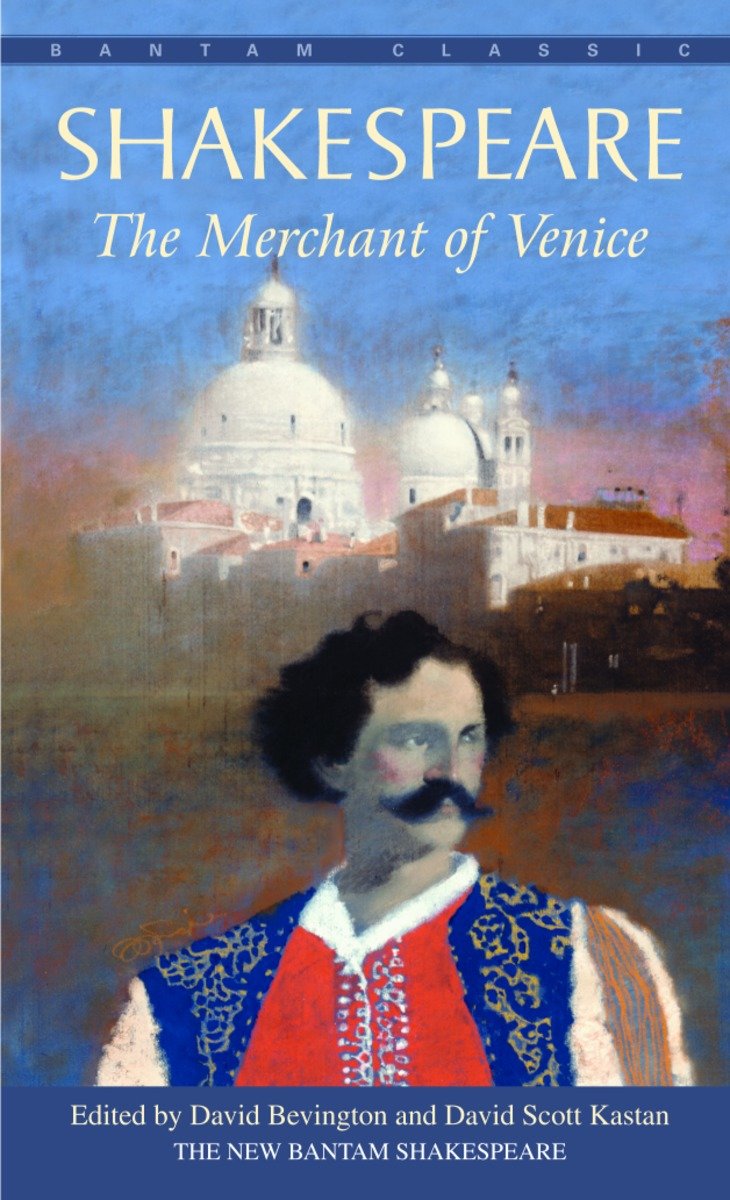
The Merchant of Venice
5.00 JOD
Please allow 2 – 5 weeks for delivery of this item
Description
This is one of Shakespeare’s darkest comedies, for the romantic story of a young man, Bassanio, who has squandered his fortune and must borrow money to woo the wealthy lady he loves is set against the more disturbing story of the Jewish moneylender Shylock and his demand for the “pound of flesh” owed him by the Venetian merchant, Antonio. Here pathos and farce combine with moral complexity and romantic entanglement to display the extraordinary power and range of Shakespeare at his best.Each Edition Includes:• Comprehensive explanatory notes • Vivid introductions and the most up-to-date scholarship • Clear, modernized spelling and punctuation, enabling contemporary readers to understand the Elizabethan English• Completely updated, detailed bibliographies and performance histories • An interpretive essay on film adaptations of the play, along with an extensive filmography
Additional information
| Weight | 0.16 kg |
|---|---|
| Dimensions | 1.78 × 10.7 × 17.05 cm |
| PubliCanadation City/Country | USA |
| ISBN 10 | 0553212990 |
| About The Author | William Shakespeare was born in Stratford-upon-Avon in April 1564, and his birth is traditionally celebrated on April 23. The facts of his life, known from surviving documents, are sparse. He was one of eight children born to John Shakespeare, a merchant of some standing in his community. William probably went to the King’s New School in Stratford, but he had no university education. In November 1582, at the age of eighteen, he married Anne Hathaway, eight years his senior, who was pregnant with their first child, Susanna. She was born on May 26, 1583. Twins, a boy, Hamnet ( who would die at age eleven), and a girl, Judith, were born in 1585. By 1592 Shakespeare had gone to London working as an actor and already known as a playwright. A rival dramatist, Robert Greene, referred to him as “an upstart crow, beautified with our feathers.” Shakespeare became a principal shareholder and playwright of the successful acting troupe, the Lord Chamberlain’s Men (later under James I, called the King’ s Men). In 1599 the Lord Chamberlain’s Men built and occupied the Globe Theater in Southwark near the Thames River. Here many of Shakespeare’s plays were performed by the most famous actors of his time, including Richard Burbage, Will Kempe, and Robert Armin. In addition to his 37 plays, Shakespeare had a hand in others, including Sir Thomas More and The Two Noble Kinsmen, and he wrote poems, including Venus and Adonis and The Rape of Lucrece. His 154 sonnets were published, probably without his authorization, in 1609. In 1611 or 1612 he gave up his lodgings in London and devoted more and more time to retirement in Stratford, though he continued writing such plays as The Tempest and Henry VII until about 1613. He died on April 23 1616, and was buried in Holy Trinity Church, Stratford. No collected edition of his plays was published during his life-time, but in 1623 two members of his acting company, John Heminges and Henry Condell, put together the great collection now called the First Folio. |
| Excerpt From Book | [Dramatis PersonaeTHE DUKE OF VENICEANTONIO, a merchant of Venice BASSANIO, his friend, suitor to PortiaGRATIANO, a follower of Bassanio, in love with NerissaSOLANIO, friends to AntonioSALERIO, and BassanioLORENZO, in love with JessicaLEONARDO, servant to BassanioPORTIA, a rich heiress of BelmontNERISSA, her waiting-gentlewomanBALTHASAR, servant to PortiaSTEPHANO, servant to PortiaTHE PRINCE OF MOROCCO, suitor to PortiaTHE PRINCE OF ARAGON, suitor to PortiaA MESSENGER to PortiaSHYLOCK, a rich JewJESSICA, his daughterTUBAL, a Jew, Shylock's friendLANCELOT GOBBO, a clown, servant to Shylock and then to BassanioOLD GOBBO, Lancelot's fatherMagnificoes of Venice, Officers of the Court of Justice, Jailor, Servants to Portia, and other AttendantsScene: Partly at Venice and partly at Belmont,the seat of Portia]1.1. Location: A street in Venice.1In sooth Truly. sad morose, dismal-looking.5am to learn have yet to learn6such . . . of me such sadness makes me so distracted, lacking in good sense9argosies large merchant ships. (So named from Ragusa, the modern city of Dubrovnik.) portly majestic10signors gentlemen. flood sea11pageants mobile stages used in plays or processions12overpeer look down upon13curtsy i.e., bob up and down, or lower topsails in token of respect (reverence)14woven wings canvas sails.15venture forth investment at risk17still continually19roads anchorages, open harbors23blow . . . ague i.e., start me shivering26flats shoals[1.1] A Enter Antonio, Salerio, and Solanio.ANTONIOIn sooth, I know not why I am so sad.1It wearies me, you say it wearies you;But how I caught it, found it, or came by it,What stuff 'tis made of, whereof it is born,I am to learn;5And such a want-wit sadness makes of me6That I have much ado to know myself.SALERIOYour mind is tossing on the ocean,There where your argosies with portly sail,9Like signors and rich burghers on the flood,10Or as it were the pageants of the sea,11Do overpeer the petty traffickers12That curtsy to them, do them reverence,13As they fly by them with their woven wings.14SOLANIOBelieve me, sir, had I such venture forth,15The better part of my affections wouldBe with my hopes abroad. I should be still17Plucking the grass to know where sits the wind,Peering in maps for ports and piers and roads;19And every object that might make me fearMisfortune to my ventures, out of doubtWould make me sad.SALERIO My wind cooling my brothWould blow me to an ague when I thought23What harm a wind too great might do at sea.I should not see the sandy hourglass runBut I should think of shallows and of flats,2627Andrew name of a ship. (Perhaps after the St. Andrew, a Spanish galleon captured at Cadiz in 1596.)28Vailing lowering. (Usually as a sign of submission.) high-top topmast29burial burial place.31bethink me straight be put in mind immediately35even now a short while ago. this i.e., the cargo of spices and silks38bechanced having happened42bottom ship's hold44Upon . . . year i.e., risked upon the chance of the present year.50two-headed Janus a Roman god of all beginnings, represented by a figure with two faces51framed fashioned52peep . . . eyes i.e., look with eyes narrowed by laughter53at a bagpiper i.e., even at a bagpiper, whose music was regarded as melancholic54other others. vinegar aspect sour, sullen looks56Nestor venerable senior officer in the Iliad, noted for gravityAnd see my wealthy Andrew docked in sand,27Vailing her high-top lower than her ribs28To kiss her burial. Should I go to church29And see the holy edifice of stoneAnd not bethink me straight of dangerous rocks31Which, touching but my gentle vessel's side,Would scatter all her spices on the stream,Enrobe the roaring waters with my silks,And, in a word, but even now worth this,35And now worth nothing? Shall I have the thoughtTo think on this, and shall I lack the thoughtThat such a thing bechanced would make me sad?38But tell not me. I know AntonioIs sad to think upon his merchandise.ANTONIOBelieve me, no. I thank my fortune for it,My ventures are not in one bottom trusted,42Nor to one place; nor is my whole estateUpon the fortune of this present year.44Therefore my merchandise makes me not sad.SOLANIOWhy then, you are in love.ANTONIO Fie, fie!SOLANIONot in love neither? Then let us say you are sadBecause you are not merry; and 'twere as easyFor you to laugh and leap, and say you are merryBecause you are not sad. Now, by two-headed Janus,50Nature hath framed strange fellows in her time:51Some that will evermore peep through their eyes52And laugh like parrots at a bagpiper,53And other of such vinegar aspect54That they'll not show their teeth in way of smileThough Nestor swear the jest be laughable.5661prevented forestalled64th'occasion the opportunity66laugh i.e., be merry together.67strange distant. Must it be so? Must you go? or, Must you show reserve?68We'll . . . yours We'll adjust our spare time to accommodate your schedule.74respect . . . world concern for worldly affairs of business.Enter Bassanio, Lorenzo, and Gratiano.Here comes Bassanio, your most noble kinsman,Gratiano, and Lorenzo. Fare ye well.We leave you now with better company.SALERIOI would have stayed till I had made you merry,If worthier friends had not prevented me.61ANTONIOYour worth is very dear in my regard.I take it your own business calls on you,And you embrace th'occasion to depart.64SALERIO Good morrow, my good lords.BASSANIOGood signors both, when shall we laugh? Say, when?66You grow exceeding strange. Must it be so?67SALERIOWe'll make our leisures to attend on yours.68Exeunt Salerio and Solanio.LORENZOMy lord Bassanio, since you have found Antonio,We two will leave you, but at dinnertime,I pray you, have in mind where we must meet.BASSANIO I will not fail you.GRATIANOYou look not well, Signor Antonio.You have too much respect upon the world.74They lose it that do buy it with much care.Believe me, you are marvelously changed.ANTONIOI hold the world but as the world, Gratiano–A stage where every man must play a part,And mine a sad one.gratianoLet me play the fool.81heat with wine (The liver was regarded as the seat of the passions and wine as an agency for inflaming them.)82mortifying penitential and deadly. (Sighs were thought to cost the heart a drop of blood.)84in alabaster i.e., in a stone effigy upon a tomb.85jaundice (Regarded as arising from the effects of too much choler or yellow bile, one of the four humors, in the blood.)89cream and mantle become covered with scum, i.e., acquire a lifeless, stiff expression. standing stagnant90-2 And . . . conceit and who maintain a willful silence in order to acquire a reputation for gravity and deep thought93As . . . say as if to say94let . . . bark i.e., let no creature dare to interrupt me.98-9 would . . . fools i.e., would virtually condemn their hearers into calling them fools. (Compare Matthew 5:22, in which anyone calling another a fool is threatened with damnation.)101-2 fish . . . opinion i.e., don't go fishing for a reputation of being wise, using your melancholy silence as the bait to fool people. (Gudgeon, a small fish, was thought of as a type of gullibility.)106dumb mute, speechless108keep if you keep110for this gear in view of what you say.With mirth and laughter let old wrinkles come,And let my liver rather heat with wine81Than my heart cool with mortifying groans.82Why should a man whose blood is warm withinSit like his grandsire cut in alabaster?84Sleep when he wakes, and creep into the jaundice85By being peevish? I tell thee what, Antonio–I love thee, and 'tis my love that speaks–There are a sort of men whose visagesDo cream and mantle like a standing pond,89And do a willful stillness entertain90With purpose to be dressed in an opinion91Of wisdom, gravity, profound conceit,92As who should say, "I am Sir Oracle,93And when I ope my lips let no dog bark!"94Oh, my Antonio, I do know of theseThat therefore only are reputed wiseFor saying nothing, when, I am very sure,If they should speak, would almost damn those ears98Which, hearing them, would call their brothers fools.99I'll tell thee more of this another time.But fish not with this melancholy bait101For this fool gudgeon, this opinion.–102Come, good Lorenzo.–Fare ye well awhile.I'll end my exhortation after dinner.LORENZO [to Antonio and Bassanio]Well, we will leave you then till dinnertime.I must be one of these same dumb wise men,106For Gratiano never lets me speak.GRATIANOWell, keep me company but two years more,108Thou shalt not know the sound of thine own tongue.ANTONIOFare you well. I'll grow a talker for this gear.110112neat's ox's. not vendible i.e., not yet salable in the marriage market.113Is . . . now? i.e., Was all that talk about anything?115reasons reasonable ideas119the same i.e., the one124By . . . port by showing a somewhat more lavish style of living125grant continuance allow to continue.126-7 make . . . rate complain at being cut back from such a high style of living128to . . . off honorably to extricate myself129time youthful lifetime130gaged pledged, in pawn.132warranty authorization133unburden disclose136-7 if . . . honor if it looks honorable, as your conduct has always doneGRATIANOThanks, i'faith, for silence is only commendableIn a neat's tongue dried and a maid not vendible.112Exeunt [Gratiano and Lorenzo].ANTONIO Is that anything now?113BASSANIO Gratiano speaks an infinite deal of nothing,more than any man in all Venice. His reasons are as 115two grains of wheat hid in two bushels of chaff; youshall seek all day ere you find them, and when youhave them they are not worth the search.ANTONIOWell, tell me now what lady is the same119To whom you swore a secret pilgrimage,That you today promised to tell me of.BASSANIO'Tis not unknown to you, Antonio,How much I have disabled mine estateBy something showing a more swelling port124Than my faint means would grant continuance.125Nor do I now make moan to be abridged126From such a noble rate; but my chief care127Is to come fairly off from the great debts128Wherein my time, something too prodigal,129Hath left me gaged. To you, Antonio,130I owe the most, in money and in love,And from your love I have a warranty132To unburden all my plots and purposes133How to get clear of all the debts I owe.ANTONIOI pray you, good Bassanio, let me know it;And if it stand, as you yourself still do,136Within the eye of honor, be assured137My purse, my person, my extremest meansLie all unlocked to your occasions.140shaft arrow141his its. selfsame flight same kind and range142advisd careful143forth out. adventuring risking145innocence ingenuousness, sincerity.148self same150or either151hazard that which was risked152rest remain153spend but time only waste time154To . . . circumstance i.e., in not asking plainly what you want. (Circumstance here means "circumlocution.")156In . . . uttermost in showing any doubt of my intention to do all I can160prest ready161richly left left a large fortune (by her father's will)163Sometimes Once165-6 nothing undervalued To of no less worth than166Portia (The same Portia as in Shakespeare's Julius Caesar.)171Colchis' (Jason adventured for the golden fleece in the land of Colchis, on the Black Sea.) strand shoreBASSANIOIn my schooldays, when I had lost one shaft,140I shot his fellow of the selfsame flight141The selfsame way with more advised watch142To find the other forth, and by adventuring both143I oft found both. I urge this childhood proofBecause what follows is pure innocence.145I owe you much, and, like a willful youth,That which I owe is lost; but if you pleaseTo shoot another arrow that self way148Which you did shoot the first, I do not doubt,As I will watch the aim, or to find both150Or bring your latter hazard back again151And thankfully rest debtor for the first.152ANTONIOYou know me well, and herein spend but time153To wind about my love with circumstance;154And out of doubt you do me now more wrongIn making question of my uttermost156Than if you had made waste of all I have.Then do but say to me what I should doThat in your knowledge may by me be done,And I am prest unto it. Therefore speak.160BASSANIOIn Belmont is a lady richly left;161And she is fair and, fairer than that word,Of wondrous virtues. Sometimes from her eyes163I did receive fair speechless messages.Her name is Portia, nothing undervalued165To Cato's daughter, Brutus' Portia.166Nor is the wide world ignorant of her worth,For the four winds blow in from every coastRenowned suitors, and her sunny locksHang on her temples like a golden fleece,Which makes her seat of Belmont Colchis' strand,171And many Jasons come in quest of her.175presages i.e., that presages thrift profit and good fortune178commodity merchandise179a present sum ready money.181racked stretched183presently immediately184no question make have no doubt185of my trust on the basis of my credit as a merchant. sake i.e., personal sake.1.2. Location: Belmont. Portia's house.1troth faith3would be would have reason to be (weary)5surfeit overindulge7mean small. (With a pun; see next note.)7-8 in the mean having neither too much nor too little.8comes sooner by acquires sooner9competency modest means10sentences maxims. pronounced delivered.14divine clergyman18blood (Thought of as a chief agent of the passions, which in turn were regarded as the enemies of reason.)Oh, my Antonio, had I but the meansTo hold a rival place with one of them,I have a mind presages me such thrift175That I should questionless be fortunate.ANTONIOThou know'st that all my fortunes are at sea;Neither have I money nor commodity178To raise a present sum. Therefore go forth.179Try what my credit can in Venice do;That shall be racked even to the uttermost181To furnish thee to Belmont, to fair Portia.Go presently inquire, and so will I,183Where money is, and I no question make184To have it of my trust or for my sake.Exeunt. 185[1.2] A Enter Portia with her waiting woman, Nerissa.PORTIA By my troth, Nerissa, my little body is aweary 1 |
Only logged in customers who have purchased this product may leave a review.
Related products
![Rethinking Reward]()
On backorder 2-5 Weeks to Arrive
59.99 JOD![International Finance]()
On backorder 2-5 Weeks to Arrive
59.99 JOD![]()
On backorder 2-5 Weeks to Arrive
10.99 JOD![Born For This]()
On backorder 2-5 Weeks to Arrive
10.99 JOD




Reviews
There are no reviews yet.