
Loading cart contents...
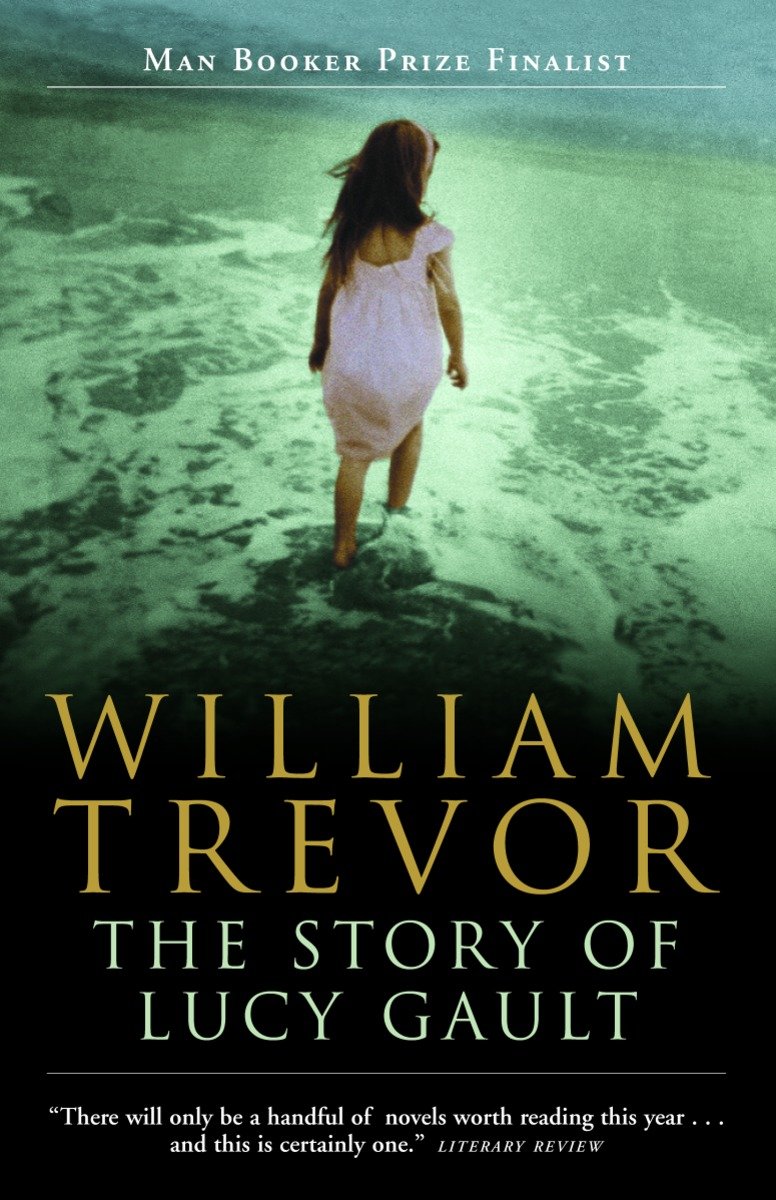
The Story of Lucy Gault
16.00 JOD
Please allow 2 – 5 weeks for delivery of this item
Description
In the early morning of June the twenty-first, nineteen twenty-one, three arsonists — shadows in the night — arrive at Lahardane, the home of Captain Everard Gault, his wife, Heloise, and daughter, Lucy. The sheepdogs that alarmed the Gaults of previous trespasses had since been poisoned. On this occasion, though, it is a warning shot fired above the silhouetted heads that sends them retreating, saving the estate from being set ablaze. But blood speckles the pebbles of the approach in the dawn’s light, implying that the Captain’s single shot wounded one of the intruders. Everard quickly learns the identity of the wounded — a boy named Horahan — and thereafter sets to make amends. His apologies and offers of restitution to the boy and his family are ineffective, however, and the Gaults realize then that further defiance to certain forthcoming attacks is senseless. “The past was the enemy in Ireland,” writes Trevor. Protestant property was the common target in this time of insurrection and civil war, two years after Sinn Fein declared Ireland independent, and the Gaults had obvious British sympathies: Everard, a former British army officer; Heloise, an English wife and mother; Lahardane, an ancestral Irish property since the eighteenth century. It is too dangerous for them to stay. They too must desert Ireland like so many families before them.Eight-year-old Lucy is never properly explained the danger of staying at Laharadane. It is the only place she has known; a place where the flow of streams around moss-covered stones, the bloom of the apple orchard, the pull of the sea’s tide, and the fishermen on the shore are the very fabric of her being. So it is then, forlorn and mournful, that Lucy decides to run away on the night before her family’s scheduled departure for England. However, when her parents find an article of her clothing on the shore where she frequently went swimming they fear the worst: that she has drowned.Stricken by grief and remorse, devastated by guilt and blame, Everard and Heloise regard the plans they have made and retreat from Ireland. Windows are boarded, furniture is draped, and Lahardane is left in the care of their servants, Henry and Bridget. But almost as soon as the Gaults have left Henry finds Lucy — alive, emaciated, her ankle broken and badly swollen — in an abandoned cottage in the woods. The Gaults, however, have forsaken their intentions to relocate to England and have vanished into Europe. The trail following them is less than cold, their whereabouts critical yet unknown, and for thirty years this remains as they sojourn through France, Switzerland and Italy.Henry and Bridget resuscitate Lahardane and take up custodial care of Lucy. As she matures, though, she also becomes more reclusive and insular. Children in the village refuse to play with her. She is stared at, spoken of in hushed tones and, over time, exiled. The anguish over her parents’ fate wanes as the myth of hers similarly grows. She develops into a voracious reader and to a certain degree lives her life vicariously through the characters that populate the novels in her family’s extensive library. It is by chance then that at age twenty-four Lucy meets a man — Ralph.Ralph, a young Englishman, arrives in Ennisealea to work as a tutor to the banker’s sons for the summer. While on a drive, familiarizing himself with the Irish countryside, he happens upon Lahardane. Ralph and Lucy, upon meeting, are immediately enchanted with one another and Ralph, after his departure, can’t let a thought pass through his mind that isn’t of beautiful Lucy. Properly, he is invited back to Lahardane, as those closest to Lucy hold their breath and privately hope that Ralph will become her future suitor. Sadly, those hopes are dashed. The end of summer nears and so too does Ralph’s tenure with the Ryalls, but not before he pronounces his love for Lucy. Lucy’s self-reproach for the bisecting of her family weighs heavy, though. “She believed she had no right to love until she felt forgiven,” and thusly she rejects Ralph’s affection and proposal of marriage. His love unrequited, Ralph returns to his English home and shortly thereafter enters the war.Guilt-laden, unbeknown to them that their daughter and home persevere, Everard and Heloise live a life in exile on the continent — an exile both self-imposed and inflicted by Mussolini’s war. It’s not until Heloise contracts influenza and perishes that Everard resolves to return to Ireland and the home he left behind three decades previous.Arriving at Lahardane, the Captain is astonished to find the house unsealed and tended. Yet he is more astonished to find Lucy alive; the daughter he thought for deceased now a grown woman. But Everard’s return to a paternal relationship with Lucy is, logically, strained. Moreover, he feels undeserved of anything greater than the respect Henry and Bridget would extend to that of a stranger, for it is their house now — as it has been since he entrusted it to their care with his exit in nineteen twenty-one — and he is a phantasm. Still, Everard makes every effort to atone for his absence, for an adolescence and adulthood choked by his neglect, delinquency and taciturnity.In the end, the forgiveness that Everard searches for is diminished by his daughter’s redemption: Lucy has forgiven the arsonist wounded by his single shot. It was the young boy, Horahan, who many, many years ago put the tragic sequence of events in their lives into motion. But it is now the older man, after unrelenting nightmares of successfully setting the Gault estate ablaze, killing Lucy, who is driven to insanity.
Additional information
| Weight | 0.2 kg |
|---|---|
| Dimensions | 1.7 × 13.3 × 20.2 cm |
| PubliCanadation City/Country | Canada |
| ISBN 10 | 0676975461 |
| About The Author | William Trevor knows the Ireland he writes of well, a country he frequently visits but hasn’t resided in for over a half-century. Born in Mitchelstown, County Cork, in 1928, his childhood was a tour of small provincial towns requiring his father’s authority as a minor official in the Bank of Ireland. After graduating from Trinity College Dublin — where he met his wife of now fifty-one years, Jane Ryan — he left for England. He and his wife now live in an 18th-century thatched cottage in Devon but his birth-country still serves as the setting for many of his stories. Paradoxically, Trevor has said, “I couldn’t write about Ireland if I was living there. I would be much too close.”Dubbed as the Chekhov of contemporary fiction, self-described as “a short story writer who likes to write novels,” Wiliam Trevor is captivated by the human condition and what poisons relationships — adversity, dark ambitions, miscommunication, vindictiveness, implications and insinuations, to name a few. “ A lot of people make easy mistakes and they can lead you into the most appalling tragedy,” he once said in a rare interview with The Globe and Mail. “That’s the territory I like — where somebody does something which is small, slight, but has multiple consequences.”Now age seventy-five, Trevor says he writes every day to stave off melancholy: the consequence of a writing obsession. Fortunately, the product of his obsession has been thirteen novels — four of which have been nominated for the Man Booker Prize — and a catalogue of novellas, short stories, essays, plays and memoirs, for which he has often been acclaimed the greatest writer in the English language today.Much of his work has been adapted into film and televsion dramas, including “The Ballroom of Romance,” Fools of Fortune, My House in Umbria, and Felicia’s Journey, which was directed by Canadian filmmaker Atom Egoyan. An acquaintance of bestseller lists, Trevor has also been the recipient of numerous awards, including the Hawthornden Prize, The Yorkshire Post Book of the Year Award, the Whitbread Book of the Year Award — twice — and the Lannan Literary Award for Fiction. He is a member of the Irish Academy of Letters and an appointed honorary Commander of the British Empire in recognition of his services to literature. |
“Trevor, one of the finest writers in the English-speaking world, can sum up a decade in a sentence…. It seems like minutes until [the novel is] over.” — The Hamilton Spectator“Illuminating book from Ireland’s answer to Chekhov.” — The Edmonton Journal"[a] gravely beautiful, subtle and haunting Irish novel" — The Guardian, August 31, 2002"there will only be a handful of novels worth reading this year…and this book is certainly one" — Literary Review, September, 2002"a delicately rendered account of damage, guilt and grief" — The Sunday Times, August 18, 2002"simplicity, precision and a rare ability to understand the remarkable in what appears ordinary" — The Sunday Telegraph, September 1, 2002"The Story of Lucy Gault persists with the quality which other writers have admired in him for 30 years" — Prospect, September, 2002Praise for William Trevor:“Often spoken of in the same breath as. . .Chekov, Trevor shares [his] subtlety, and, like [him], is able to create distinct and mysterious worlds.” — National Post“[Trevor is] the reigning lion of fiction in English.” — The Globe and Mail | |
| Excerpt From Book | Captain Everard Gault wounded the boy in the right shoulder on the night of June the twenty-first, nineteen twenty-one. Aiming above the trespassers' heads in the darkness, he fired the single shot from an upstairs window and then watched the three figures scuttling off, the wounded one assisted by his companions.They had come to fire the house, their visit expected because they had been before. On that occasion they had come later, in the early morning, just after one. The sheepdogs had seen them off, but within a week the dogs lay poisoned in the yard and Captain Gault knew that the intruders would be back. 'We're stretched at the barracks, sir,' Sergeant Talty had said when he came out from Enniseala. 'Oh, stretched shocking, Captain.' Lahardane wasn't the only house under threat; every week somewhere went up, no matter how the constabulary were spread. 'Please God, there'll be an end to it,' Sergeant Talty said, and went away. Martial law prevailed, since the country was in a state of unrest, one that amounted to war. No action was taken about the poisoning of the dogs.When daylight came on the morning after the shooting, blood could be seen on the sea pebbles of the turn-around in front of the house. Two petrol tins were found behind a tree. The pebbles were raked, a couple of bucketfuls that had been discoloured in the accident taken away.Captain Gault thought it would be all right then: a lesson had been learnt. He wrote to Father Morrissey in Enniseala, asking him to pass on his sympathy and his regret if the priest happened to hear who it was who'd been wounded. He had not sought to inflict an injury, only to make it known that a watch was being kept. Father Morrissey wrote back. He was always the wild one in that family, he concluded his comments on the event, but there was an awkwardness about his letter, about the choice of phrases and of words, as if he found it difficult to comment on what had occurred, as if he didn't understand that neither death nor injury had been intended. He had passed the message on, he wrote, but no acknowledgement had come back from the family he referred to.Captain Gault had been wounded himself. For six years, since he had come back an invalid from the trenches, he had carried fragments of shrapnel in his body, and they would always be there now. His injury at that time had brought his military career to an end: he would remain forever a captain, which was intensely a disappointment, since he had always imagined achieving much higher rank. But he was not, in other ways, a disappointed man. There was the great solace of his happy marriage, of the child his wife, Heloise, had borne him, of his house. There was no other place he might more happily have lived than beneath the slated roof of its three grey storeys, the stone softened by the white woodwork of the windows and the delicate fanlight above a white hall door. Flanking it on its right was the wide high archway of a cobbled yard, with cobbled passageways leading to an apple orchard and a garden. One half of the circle on to which the front rooms looked out was the gravel sweep; the other was a raised lawn that was separated from steeply rising woods by a curve of blue hydrangeas. The upstairs rooms at the back had a view of the sea as far as the sea's horizon.The origins of the Gaults in Ireland had centuries ago misted over. Previously of Norfolk – so it was believed within the family, although without much certainty – they had settled first of all in the far western reaches of County Cork. A soldier of fortune had established their modest dynasty, lying low there for reasons that were not known. Some time in the early eighteenth century the family had moved east, respectable and well-to-do by then, one son or another of each generation continuing the family's army connection. The land at Lahardane was purchased; the building of the house began. The long, straight avenue was made, lines of chestnut trees planted along it on either side, the woodlands of the glen laid out. Later generations planted the orchard, with stock from County Armagh; the garden, kept small, was created bit by bit. In 1769 Lord Townshend, the Lord Lieutenant, stayed at Lahardane; in 1809 Daniel O'Connell did when there wasn't a bedroom unoccupied at the Stuarts' Dromana. History touched the place in that way; but as well-remembered, as often talked about, were births and marriages and deaths, domestic incidents, changes and additions to this room or that, occasions of anger or reconciliation. Suffering a stroke, a Gault in 1847 lay afflicted for three years yet not insensible. There was a disastrous six months of card-playing in 1872 during which field after field was lost to the neighbouring O'Reillys. There was the diphtheria outbreak that spread so rapidly and so tragically in 1901, sparing only the present Everard Gault and his brother in a family of five. Above the writing-desk in the drawing-room there was a portrait of a distant ancestor whose identity had been unknown for as long as anyone of the present could remember: a spare, solemn countenance where it was not whiskered, blue unemphatic eyes. It was the only portrait in the house, although since photography had begun there were albums that included the images of relatives and friends as well as those of the Gaults of Lahardane.All this – the house and the remnants of the pasture land, the seashore below the pale clay cliffs, the walk along it to the fishing village of Kilauran, the avenue over which the high branches of the chestnut trees now met – was as much part of Everard Gault as the features of his face were, the family traits that quite resembled a few of those in the drawing-room portrait, the smooth dark hair. Tall and straight-backed, a man who hid nothing of himself, slight in his ambitions now, he had long ago accepted that his destiny was to keep in good heart what had been his inheritance, to attract bees to his hives, to root up his failing apple trees and replace them. He swept the chimneys of his house himself, could repoint its mortar and replace its window glass. Creeping about on its roof, he repaired in the lead the small perforations that occurred from time to time, the Seccotine he squeezed into them effective for a while.In many of these tasks he was assisted by Henry, a slow-moving, heavily made man who rarely, in daytime, removed the hat from his head. Years ago Henry had married into the gate-lodge, of which he and Bridget were now the sole occupants, since no children had been born to them and Bridget's parents were no longer alive. Her father, with two men under him, had looked after the horses and seen to all that Henry on his own now saw to in the yard and the fields. Her mother had worked in the house, her grandmother before that. Bridget was as thickset as her husband, with strong wide shoulders and a capable manner: the kitchen was wholly in her charge. The bedroom maid, Kitty Teresa, assisted Heloise Gault in what had once been the duties of several indoor servants; old Hannah walked over from Kilauran once a week to wash the clothes and sheets and tablecloths, and to scrub the tiles of the hall and the stone floors at the back. The style of the past was no longer possible at Lahardane. The long avenue passed through the land that had become the O'Reillys' at the card table, when the Gaults of that time had been left with pasture enough only to support a modest herd of Friesians.Three days after the shooting in the night Heloise Gault read the letter that had come from Father Morrissey, then turned it over and read it again. She was a slender, slightly built woman in her late thirties, her long fair hair arranged in a style that complemented her features, imbuing a demure beauty with a hint of severity that was constantly contradicted by her smile. But her smile had not been much in evidence since the night she had been woken by a shot.Even though in the ordinary run of things she was not pusillanimous, Heloise Gault felt frightened. She, too, came of an army family and had taken it in her stride when, a few years before her marriage, she was left almost alone in the world on the death of her mother, who had been widowed during the war with the Boers. Courage came naturally to her in times of upheaval or grief, but was not as generously there as she imagined it would be when she reflected upon the attempt to burn down the house she and her child and her maid had been asleep in. There'd been, as well, the poisoning of the dogs and the unanswered message to the young man's family, the blood on the pebbles. 'I'm frightened, Everard,' she confessed at last, no longer keeping her feelings private.They knew each other well, the Captain and his wife. They had in common a certain way of life, an order of priorities and concerns. Their shared experience of death when they were young had drawn them close and in their marriage had made precious for them the sense of family that the birth of a child allowed. Heloise had once assumed that other children would be born to her, and still had not abandoned hope that one more at least might be. But in the meanwhile she was so convincingly persuaded by her husband that the lack of a son to inherit Lahardane was not a failure on her part that she experienced – and more and more as her only child grew up – gratitude for the solitary birth and for a trinity sustained by affection.'It's not like you to be frightened, Heloise.''All this has happened because I'm here. Because I am an English wife at Lahardane.'She it was, Heloise insisted, who drew attention to the house, but her husband doubted it. He reminded her that what had been attempted at Lahardane was part of a pattern that was repeated all over Ireland. The nature of the house, the possession of land even though it had dwindled, the family's army connection, would have been enough to bring that trouble in the night. And he had to admit that the urge to cause destruction, whatever its origin, could not be assumed to have been stifled by the stand he'd taken. For some time afterwards Everard Gault slept in the afternoon and watched by night; and although no one disturbed his vigil, this concern with protection, and his wife's apprehension, created in the household further depths of disquiet, a nerviness that affected everyone, including in the end the household's child. |
Only logged in customers who have purchased this product may leave a review.
Related products
![]()
On backorder 2-5 Weeks to Arrive
9.99 JOD![]()
On backorder 2-5 Weeks to Arrive
16.99 JOD![]()
On backorder 2-5 Weeks to Arrive
15.99 JOD![]()
On backorder 2-5 Weeks to Arrive
8.99 JOD

Reviews
There are no reviews yet.