
Loading cart contents...
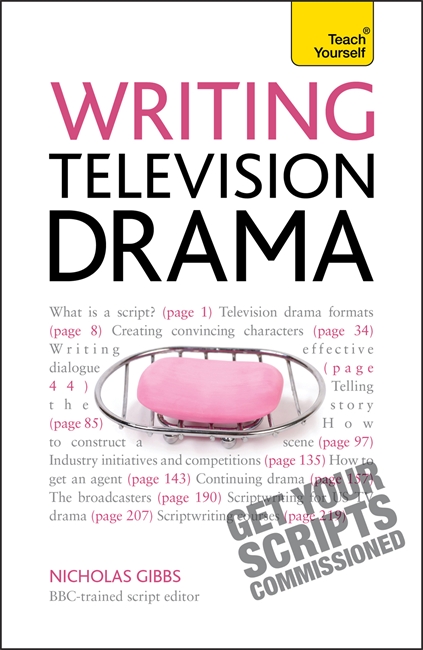
Writing Television Drama: Get Your Scripts Commissioned
16.99 JOD
Please allow 2 – 5 weeks for delivery of this item
Add to Gift RegistryOnly logged in customers who have purchased this product may leave a review.
Description
Additional information
| Weight | 0.2 kg |
|---|---|
| Dimensions | 1.8 × 13 × 19.6 cm |
| Format | |
| language1 | |
| Pages | 256 |
| Publisher | |
| Year Published | 2012-7-27 |
| Imprint | |
| Publication City/Country | London, United Kingdom |
| ISBN 10 | 1444167596 |
| About The Author | Nicholas Gibbs (Cambridge, England), a BBC-trained Script Editor, currently has two television dramas in development with independent producers and broadcasters. He runs a series of successful scriptwriting workshops which have included both writers and producers, plus a script feedback service for scriptwriters. His background is in theatre (amateur and professional) and he is a member of the Writers Guild of Great Britain. |
| Other text | Make a breakthrough: this book is an interactive and dynamic guide to making it in the world of TV scriptwriting, with a goal-orientated focus that will help you achieve recognition and break into any genre. |
| Table Of Content | 1.: Introduction – providing a background to the subject and outlining the purpose of the guide and who it is aimed at.a.: What is a Script? – Nuts and bolts definition of what a script actually is.b.: b. The Script – Format. Television Drama has different formats. Is it a series? Is it a Serial? Is it a one-off? Is it a two-, three-, four-parter? The difference between BBC, ITV, C4 and Sky drama.c.: The Spec Script – The script that is going to get you noticed2.: The Idea – What to do before writing begins. The logline. The theme. The synopsis.3.: The Characters – How to create compelling characters: The Protagonist and The Antagonist4.: The Characters #2 – Supporting Characters5.: The World – The where6.: The Script – Structurea.: a. The First Ten Pages – A new writer is judged on the first ten pages of his script as to whether that the rest of the script is read. We look at why this is and also what are the key elements that those first ten pages must have.b.: Inciting Incident – The reason you are telling this story at this time in your protagonist's life.c.: Structure. 3-Acts, 4-Acts, 5-Acts. Classical storytelling.d.: Main Plot and Sub-Plots. Story arcs. Conflicts. Reversals. Surprises.7.: The Script – Nuts and Boltsa.: Show Not Tell.e.: Writing Action. Writing 'stage' directions.f.: Dialogue. Speech patterns, interaction.g.: Scene Construction. What should every scene be doing?8.: Other Documentsh.: h. Character Biographies. Episode summaries.i.: Treatments.j.: Writing is re-writing.9.: Continuing Drama – The different demands and what can be learned writing for Casualty, Doctors, Holby, Eastenders, Coronation Street, Emmerdale, Hollyoaks.10.: Online Drama. The opportunities and constraints of drama online.11.: Who Does What?a.: a. Script Readers. What do they do? What do they look for? Who are they?b.: Script Editor. What do they do? Notes.c.: c. How to get an agent? Why do I need an agent?d.: d. No agent. What can you do?12.: 12. Industry events. Workshops. Courses. Competitions. Organisations.13.: 13. From script to screen. The process can take up to two years (or more) so what happens.14.: 14. USA Television. What are the differences and opportunities?15.: Contacts including new writer friendly production companies.16.: Glossary/Bibliography |
Related products
![The Pritikin Edge 10 Essential Ingredients for a Long and Delicious Life]()
On backorder 2-5 Weeks to Arrive
Add to Gift Registry![Bob Greene's Total Body Makeover]()
On backorder 2-5 Weeks to Arrive
Add to Gift Registry13.00 JOD![The Life You Want Get Motivated, Lose Weight, and Be Happy]()
On backorder 2-5 Weeks to Arrive
Add to Gift Registry![Odin's Ravens: A mythical race game for 2 players]()
On backorder 2-5 Weeks to Arrive
Add to Gift Registry

Reviews
There are no reviews yet.