
Loading cart contents...
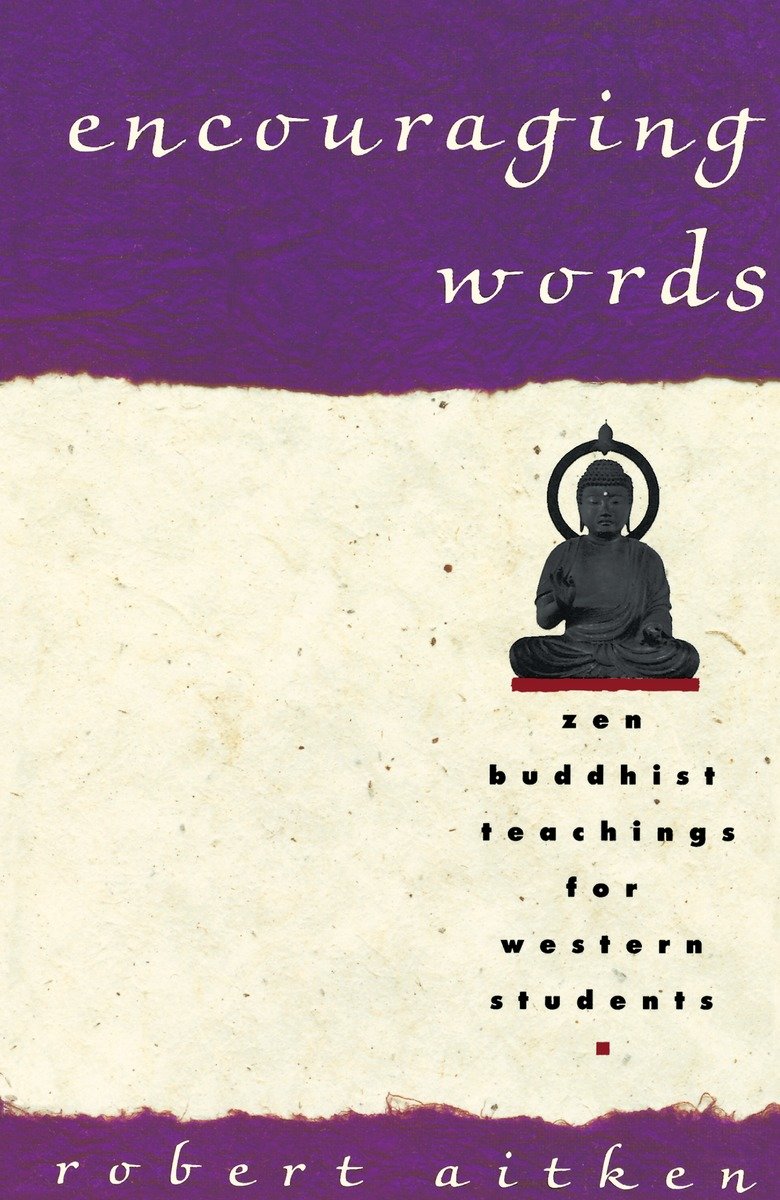
Zen Buddhist Teachings for Western Students: Encouraging Words
19.00 JOD
Please allow 2 – 5 weeks for delivery of this item
Description
Nominated for the Tricycle Prize for Outstanding Contribution to Buddhism in America—a collection of short talks and essays from a renowned meditation teacher. “The inspiration that guided monks and nuns in ancient times is our own deepest incentive as we establish our practice in a world that desperately needs new forms of kinship and love.”—Robert Aitken In this inspiring collection, you will find a series of talks and essays that Aitken Rashi has offered his students at meditation retreats during the past two decades. They are arranged according to themes central to all spiritual seekers—attention, emptiness, coming and going, diligence, death and the afterlife, the sacred self, and the moral path. Aitken provides guidance on pursuing religious practice in a lay context, “re-casting the Dharma to include women, jobs, and family.” He also charts his own quest to develop a set of moral codes in keeping with Buddhism’s basic precepts and honoring the enormous ethical challenges faced in the twentieth century.
Additional information
| Weight | 0.323475 kg |
|---|---|
| Dimensions | 1.905 × 13.97 × 21.59 cm |
| Language | |
| Format Old` | |
| Publisher | |
| Imprint | |
| Year Published | 1994-9-6 |
| by | |
| Publication City/Country | USA |
| ISBN 10 | 0679756523 |
| About The Author | ROBERT AITKEN (1917–2010) was first introduced to Zen in a Japanese internment camp during World War II. R. H. Blyth, author of Zen in English Literature, was imprisoned in the same camp, and in this setting Aitken began the first of several apprenticeships. After the war, Aitken often returned to Japan to study. He became friends with Daisetz T. Suzuki and studied with Nakagawa Sūen Rōshi and Yasutani Haku’un Rōshi. In 1959 he and his wife, Anne, established the Diamond Sangha, a Zen Buddhist society with headquarters in Hawaii. Aitken was given the title Rōshi and was authorized to teach by Yamada Kōun Rōshi in 1974; he received full transmission from Yamada Rūshi in 1985. |
“Aitken's title says it all. Encouraging Words will appeal to both beginning and advanced Zen lay students who seek to integrate their spiritual practice into everyday life. Curious readers will be rewarded, too. Here is a teacher both wise and practical in equal measure.”—Ronn Ronck, Honolulu Advertiser | |
| Table Of Content | Acknowledgments xiiiIntroduction xv WORDS IN THE DŌJŌIntroduction 1The First Night 6Coming Home 9The World Does Zazen 11Emptiness 14Condition 17The Single Point 22Carry Your Practice Lightly 24Attention 27Coming and Going 30Patience 33The Sacred Self 35Becoming Settled 38Switch Back to Mu 40Diligence 43The Dark Night 48Simple and Clear 51Like a Dream 53The Last Night 54Afterword 56Notes 57 WORDS FROM THE RŌSHIIntroduction 63The Middle Way 65Using the Self 68Ordinary Mind Is the Tao 73Cycles and Stages 79The Moral Path 76Dreams and Archetypes 94Impermanence 105The Lay Sangha 107Kōan Study and Its Implications 118Integrity and Nobility 123The Net of Indra 127Nonviolence within the Zendō and Outside 131About Practice 136Death and the Afterlife 147Notes 148 THE SYLLABUSIntroduction 157Lattice of the Dharma 161 Wu-men kuan: Case IThe Zen Buddhist Sutra Book 168 The Gāthās 170 The Sutras and a Dhāranī 172 The Dedications and the Evening Message 180 Mealtime Sutras 185 The Jukai Ceremony 189 Rōshi’s Introduction 189 The Three Vows of Refuge 190 The Three Pure Precepts 191 The Ten Grave Precepts 191 Verse of the Rakusu 194 Dedication 195The Sesshin 197 Daily Schedule 197 Leadership 198 The Three Essentials 200Dōjō Percussion Instruments 202 A Glossary of Buddhist Terms and Usages 205An Annotated Bibliography 224 |
| Excerpt From Book | from THE FIRST NIGHT Students gather for sesshin in the late afternoon the day before sesshin formally begins. They unpack, make their beds, and assemble for a work meeting. After a circle of self-introduction, sesshin jobs are assigned and explained. Newcomers are given orientation to mealtime procedures and a supper follows. At 7:00 p.m. there is one period of zazen, followed by opening remarks from the Rōshi. Dōjō leaders summarize the sesshin procedures, there is a brief period of zazen and a short sutra, and at 9:00 the students retire. We begin our sesshin tomorrow morning at four o’clock, and continue for seven days. It is like a dream, one that is repeated each month, and is repeated elsewhere as people gather for sesshin in many places and on many occasions. We sit in this dream with other students from all over the world. It is a dream of the other as no other than myself, of all time as this time now, of every place as this very Bodhi seat. The whole universe musters itself and concentrates together in sesshin—the birds, the rain, the cicadas. The circumstances are ideal. All the sesshin arrangements are settled. Everything is settled. You can forget your ordinary concerns. I was reflecting as I unpacked my suitcase this evening that all of us bring baggage to sesshin. I want to unpack all of my baggage and put it away, and I urge you to put away your stuff too. When you forget yourself and are united with your task, that is your liberation. If there is a milestone of realization on the path, well and good, but it is in the continued practice of uniting with your work that you turn the wheel of the Dharma for yourself, for the Sangha, and for the world. As Dōgen Zenji said, “Zazen is itself enlightenment.” Someone asked me, “What attitude should I hold in zazen?” I replied, “a naïve attitude,” If you feel comfortable and compatible with your teacher and your Sangha, then the time has come to just do it. At the outset of each sesshin, Yasutani Haku’un Rōshi used to announce the three rules of sesshin: no talking, no looking around, and no social greetings. These rules are grounded in the complete silence of the mind, where there is full and complete communication with all sisters and brothers. Practice your Mu there, in that pure harmony. The word “sesshin” is an ambiguous term with three intimately related meanings: “to touch the mind, to receive the mind, to convey the mind.” To touch the mind is to touch that which is not born and does not die; it does not come or go, and is always at rest. It is infinite emptiness—empty infinity—the vast and fathomless Dharma which you have vowed to understand. To receive the mind is to be open with all your senses to instruction. Someone coughs, a window squeaks, a gecko cries, cars on the freeway hum in the distance, the bell rings, the clappers go crack!—these are instructive expressions of the mind, as the sound of a stone striking a stalk of bamboo instructed Hsiang-yen. Finally, you convey the mind by the upmost integrity which you present in your manner, as you stand, sit, eat, and lie down with settled dignity, composure, and recollection—as the Buddha himself or herself. You are the teacher of us all and of yourself. You also convey the mind by containing your actions. In this way you will not distract yourself or other, and you will offer space for everyone to evolve. When I was in Japanese monasteries, I noticed that the monks had a particular style of walking. There was almost no sound. You can apply this kind of care to opening the door, to eating, and so on. Contain yourself, contain Mus, and in this way you will convey the mind. |
Only logged in customers who have purchased this product may leave a review.
Related products
![]()
On backorder 2-5 Weeks to Arrive
![]()
On backorder 2-5 Weeks to Arrive
![]()
On backorder 2-5 Weeks to Arrive
![Why Has Nobody Told Me This Before? : The No 1 Sunday Times Bestseller 2022]()
Available To Order
18.99 JOD




Reviews
There are no reviews yet.